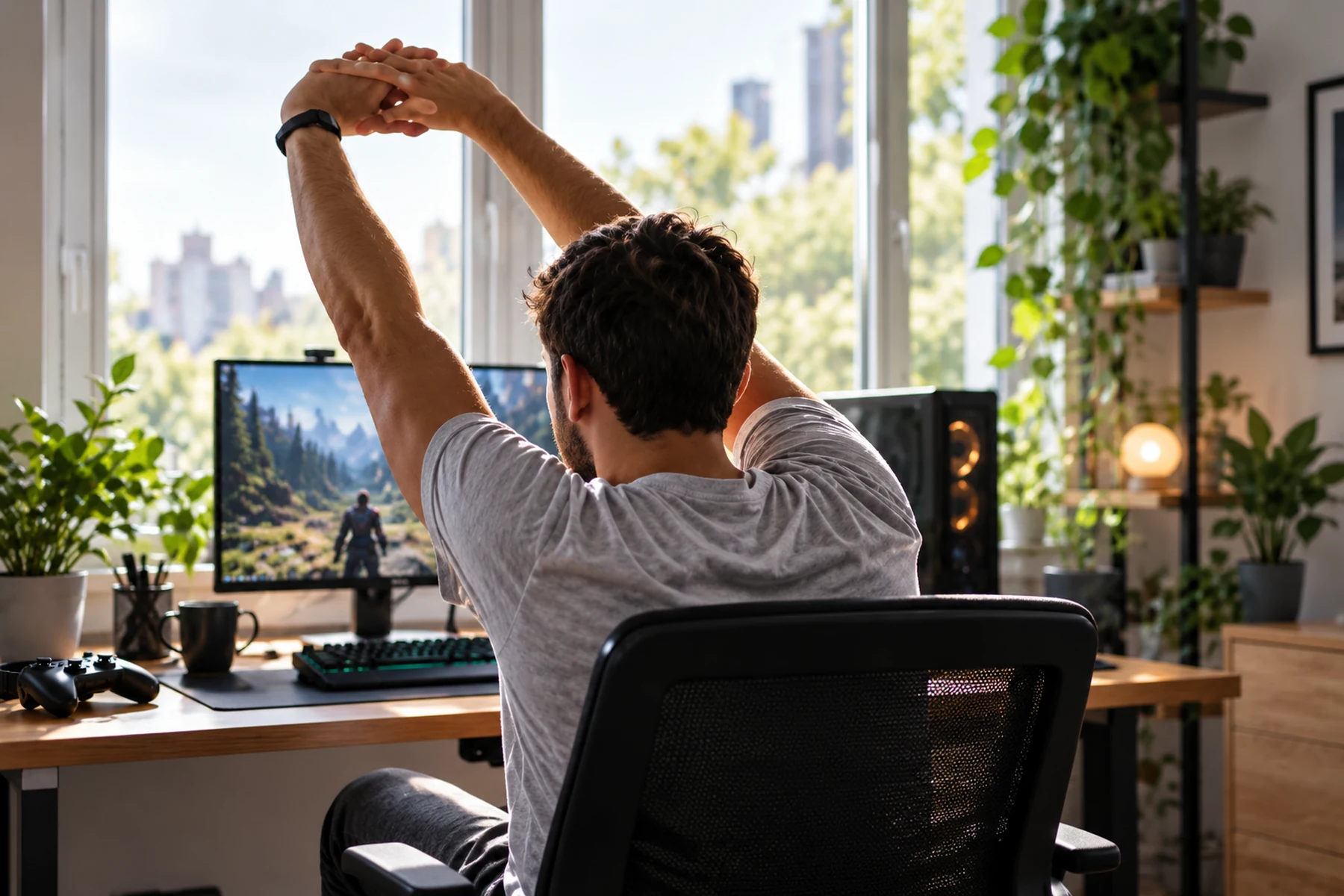
Recovery After a Long Gaming Session
Recover after a long gaming session by matching the intervention to the symptom: mental fatigue, eye strain, stiffness, wrist discomfort, hunger, dehydration or sleepiness.
Read guide →Recovery, ergonomics, physical activity and eye comfort for long gaming sessions and competitive play.

10 selected guides.
Recover after a long gaming session by matching the intervention to the symptom: mental fatigue, eye strain, stiffness, wrist discomfort, hunger, dehydration or sleepiness.
Read guide →
Use a practical post-tournament recovery plan for esports: downshift stress, eat and drink normally, protect sleep, and prepare for the next competition day.
Read guide →
Learn how to distinguish mental fatigue from sleepiness and tilt, what esports studies show, and how to decide whether to break, reset or stop playing.
Read guide →
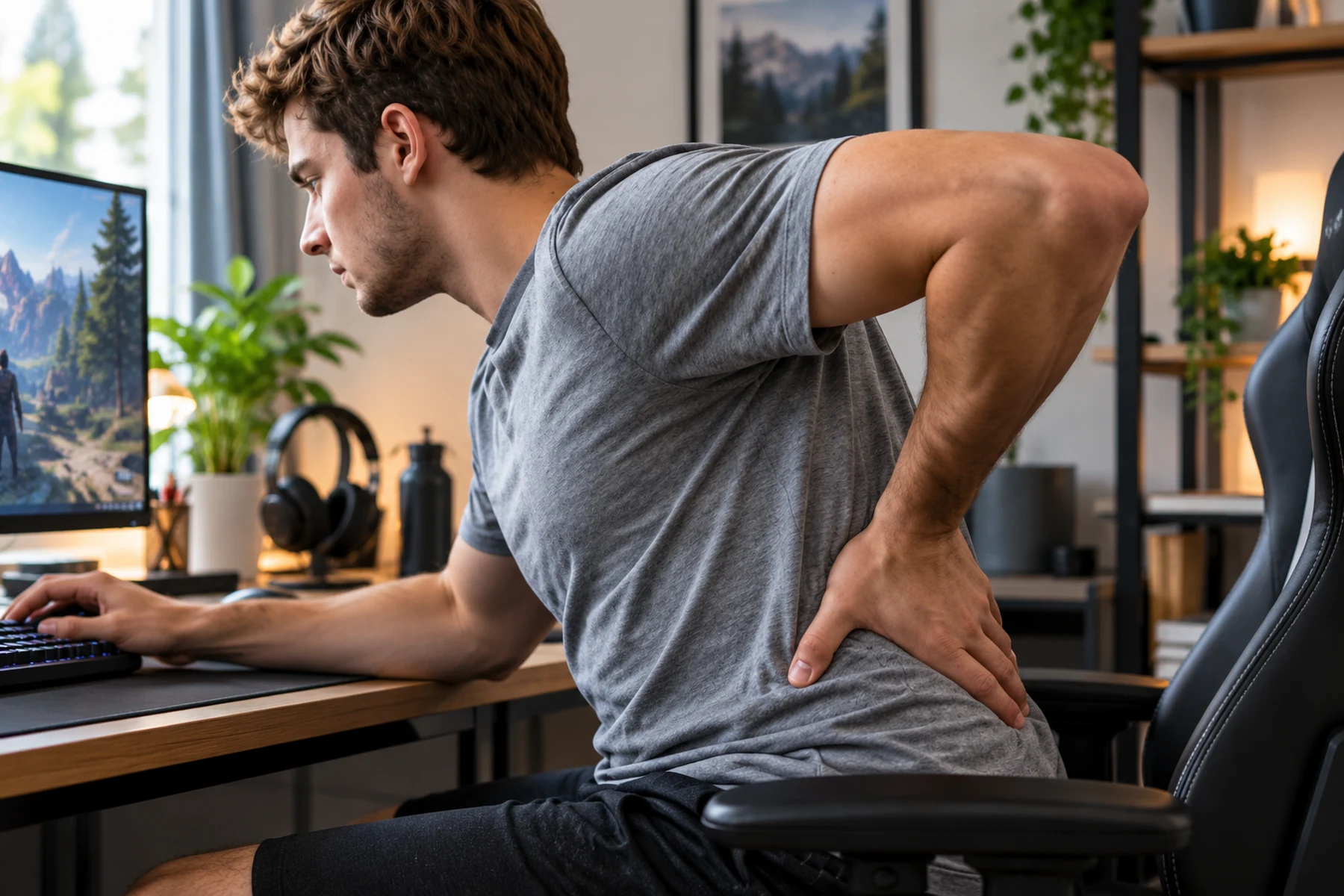
Learn why there is no single perfect gaming posture, how to identify setup-related aggravators, and what to do about back, neck and shoulder pain.
Read guide →
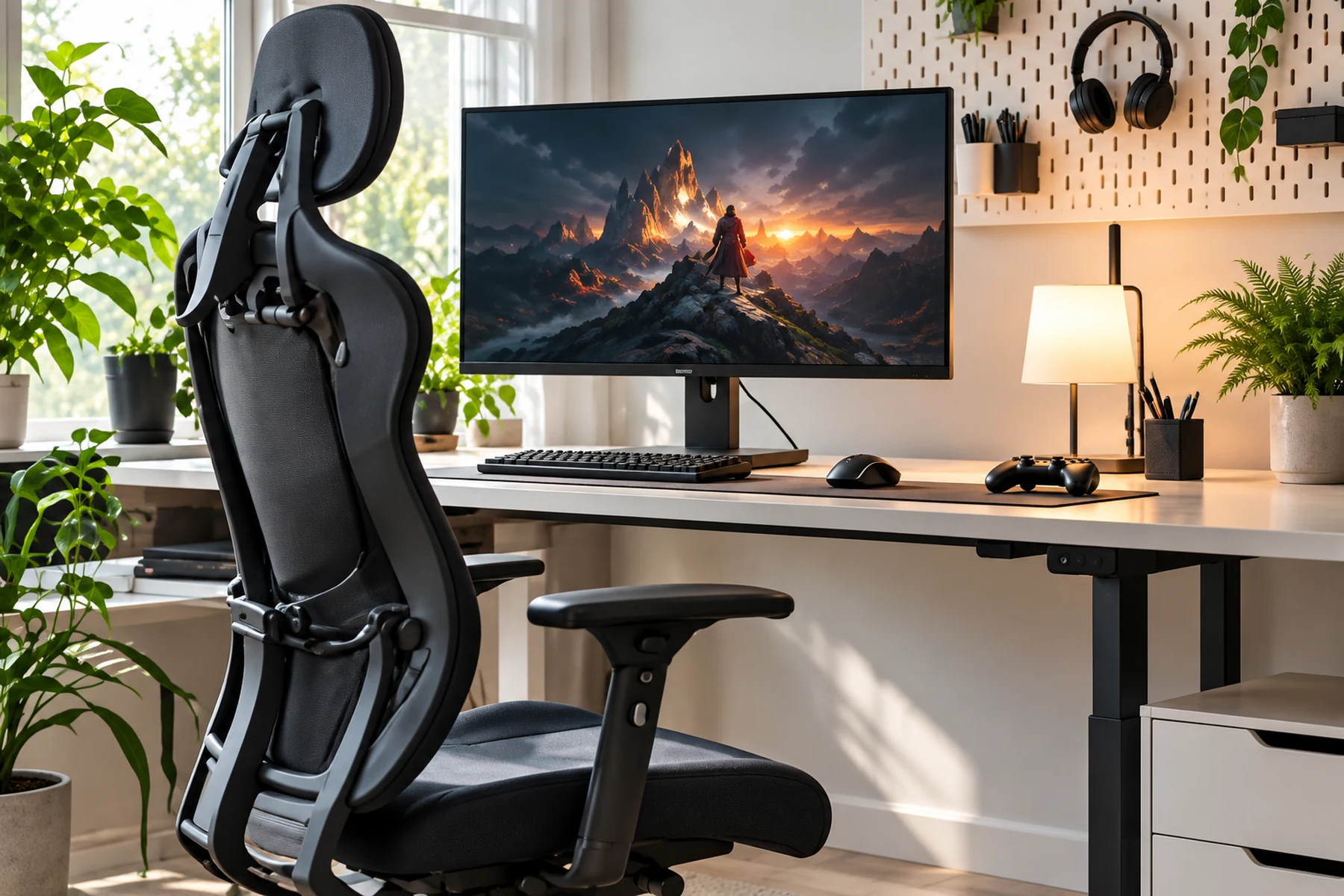
Audit your gaming setup in 15 minutes: chair, feet, desk, mouse, keyboard, monitor, lighting and movement—without chasing one perfect posture.
Read guide →
Learn how repetition, grip force, wrist position and contact pressure can contribute to gaming hand and wrist pain, and when numbness or weakness needs medical assessment.
Read guide →
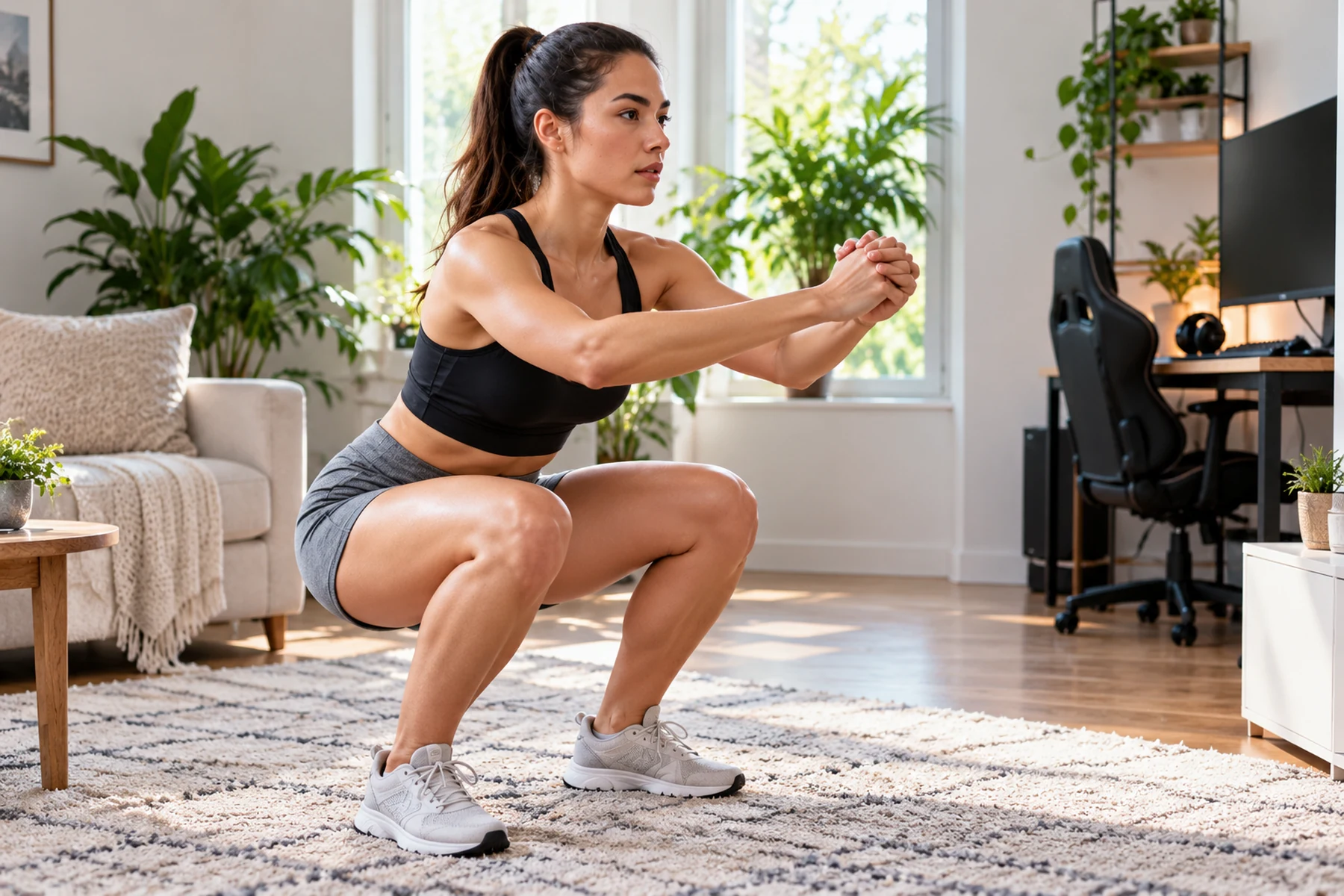
Use the right type of exercise for the right gaming problem: pre-game warm-up, movement breaks, recovery mobility and weekly training.
Read guide →
Learn the difference between sedentary behavior and physical inactivity, how much weekly activity adults need, and how gamers can break up long sitting time.
Read guide →
Build physical preparation for esports around pre-competition activation, weekly conditioning, movement breaks and fatigue management without overtraining before play.
Read guide →
Learn what causes gaming eye strain, how to distinguish dryness from focusing fatigue, and which fixes actually have evidence behind them.
Read guide →