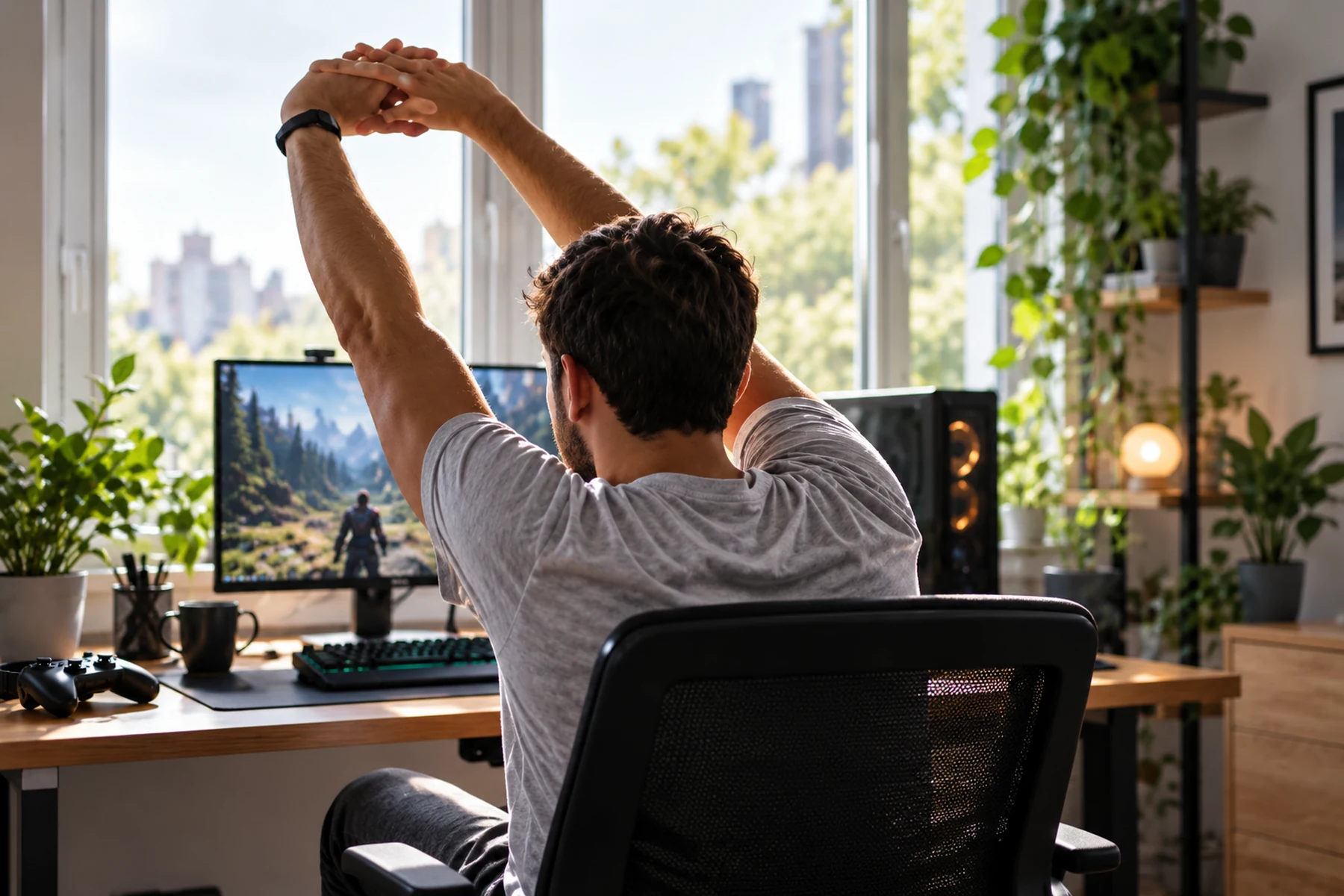
The First Hour After Logging Off
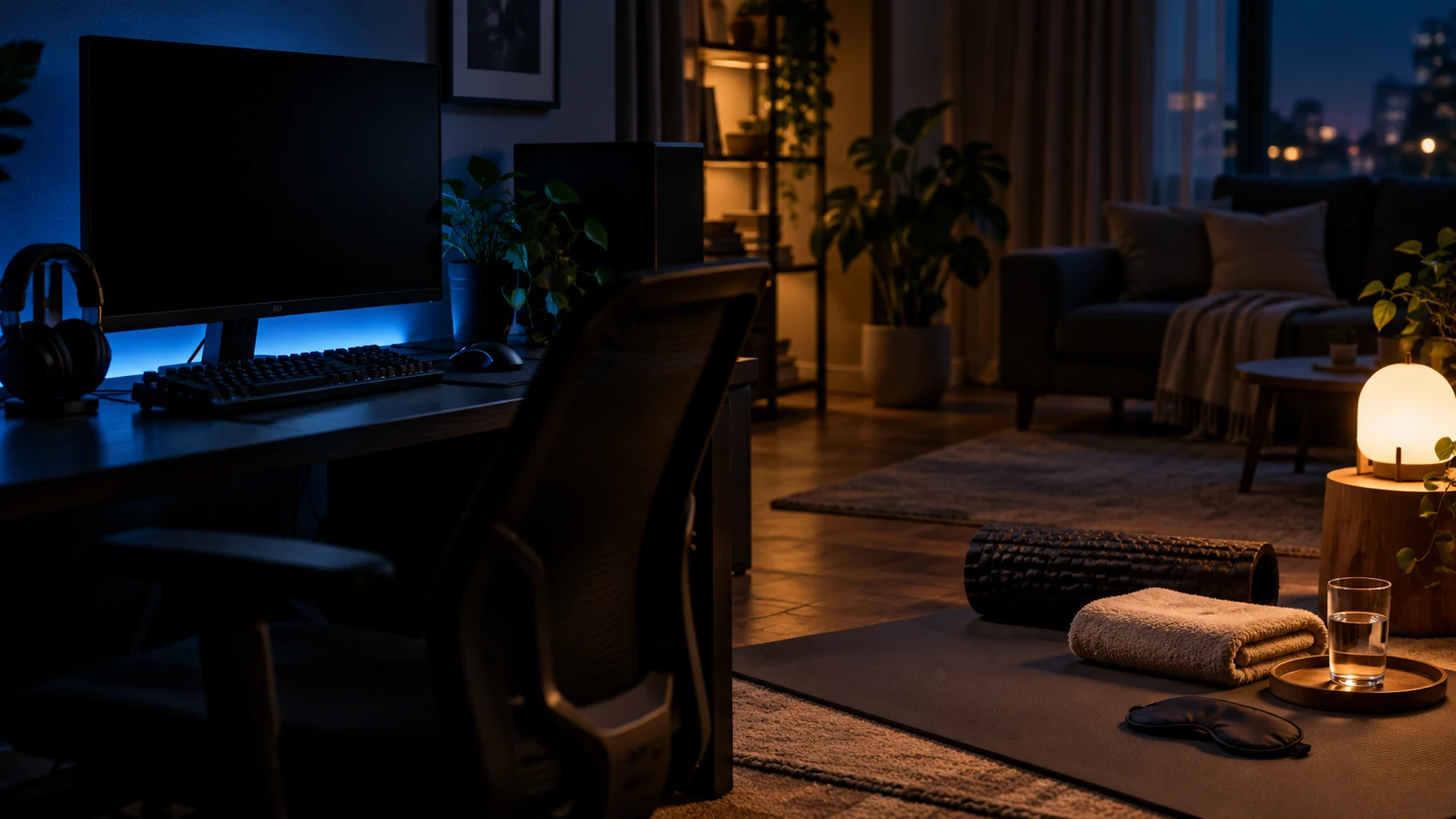
The useful first hour is simple: leave the desk, walk for a few minutes, look into the distance, drink to thirst and let the final match stop replaying in your head. If bedtime is close, keep the remaining light and screen exposure low.
This is a transition, not a “detox.” Gentle movement changes the position held for hours; slower breathing and a screen-free buffer give arousal time to settle before sleep.
One Long Session Creates Several Kinds of Fatigue
Running ranked lobbies generates an invisible physical exhaustion. You sit completely still, yet internal biological systems redline for hours. Closing the client without a structured cool-down leaves your body trapped in a state of uncoordinated arousal.
You hit the wired-yet-tired wall. The body feels drained, and the brain refuses to process new information. Meanwhile, cardiovascular output remains primed for crisis. Heart rate sits too high. Blood pressure stays elevated. Understanding why your body gets stuck in this loop gives you leverage to manually force a shutdown sequence.
Autonomic Hyperarousal and Elevated Cortisol
High-stakes matches lock your sympathetic nervous system into perpetual flight-or-fight. The brain continuously signals adrenal glands to dump epinephrine and cortisol into the bloodstream. This mix spikes heart rate. Blood pulls away from peripheral tissues. The entire system expects a physical threat that never arrives.
If you try to sleep ten minutes after a chaotic final round, residual autonomic activation blocks you. Normal sleep latency requires a dominant parasympathetic signal. The central nervous system cannot flip from high-alert vigilance into deep recovery mode on its own momentum. You must trigger the transition physically through targeted inputs.
Musculoskeletal Ischemia and Spinal Compression
A static seated posture makes the lumbar spine absorb sustained loads. Intradiscal pressure skyrockets compared to standing. Hours of static loading wring the fluid out of the fibrocartilaginous discs like a wet sponge. Localized inflammation sets in deep within the facet joints.
Simultaneously, you develop severe muscular imbalances. Hip flexors drastically shorten. Anterior deltoids round forward. Suboccipital muscles at the base of the skull lock up tight. Your gluteals and mid-back stabilizers go numb from static ischemia. Leaving these structures in the same position can prolong postural pain. You must physically undo the seated shape with deliberate force.
Dopaminergic Fatigue and Cognitive Inertia
Intense gaming loops hijack the brain's reward circuitry. Visual flashes, audio cues, and competitive victories trigger repeated unnatural dopamine spikes. After six straight hours of relentless stimulation, your receptors actively downregulate. They throttle back to protect neural circuits from excitotoxicity. You log off feeling mentally hollow. This neurochemical crater makes you extremely vulnerable to doomscrolling on a phone because the exhausted brain seeks passive stimulation to fill the void.

Choose the Intervention by the Symptom
Target specific physical recovery methods to the exact biological system causing the bottleneck. You accelerate the total systemic reset significantly.
| Physiological System | Acute Post-Session Deficit | Targeted Intervention | Execution Duration |
|---|---|---|---|
| Autonomic Nervous System | Elevated sympathetic tone and high resting heart rate | Physiological sigh and prolonged nasal exhalation | 5 to 8 Minutes |
| Spine and Musculoskeletal | Disc compression, shortened hip flexors, and neck stiffness | Spinal decompression, dead hangs, and doorway stretches | 5 to 10 Minutes |
| Ocular Apparatus | Ciliary spasm, tear film desiccation, and photic overload | Distant focal relaxation and warm eyelid compress | 5 Minutes |
| Circadian Neurochemistry | Suppressed melatonin and high blue-light exposure | Dim ambient incandescent lighting and screen blackout | 45 to 60 Minutes |
A Four-Part Wind-Down
A short sequence helps you cover each compromised physiological system. Random stretching won't cut it. You need a structured chronologically ordered reset.
Phase 1 Immediate Musculoskeletal Decompression
Get out of the chair the precise second you close the client. Stand up straight. Grab an overhead doorframe or a mounted pull-up bar. Hang passively for thirty continuous seconds. This creates powerful negative intra-articular pressure inside the spine. It vacuums fluid right back into the flattened lumbar discs.
Drop into a kneeling lunge stretch on the floor. Keep your torso vertical. Drive the hips forward slightly to reverse the extreme shortening of the psoas muscle. Finish up with ten deliberate neck retractions. Pull your chin straight backward like you are trying to make a pronounced double chin. It forces the cervical spine back into proper alignment.
Phase 2 Ocular Recalibration and Tear Restoration
Look completely away from the monitors. Ignore the smartphone entirely. Walk over to an exterior window and find the most distant horizon line you can possibly see. Stare at it for three continuous minutes. Bringing parallel light rays into the eye allows fatigued tonic ciliary muscles to relax. You effectively break the accommodative spasm caused by staring at a screen two feet away.
Run a washcloth under hot tap water. Wring it out and lay it across your lightly closed eyelids for two full minutes. The mild heat melts hardened meibomian lipid secretions stuck along the eyelid margins. The next time you blink naturally, you spread a vital fresh layer of protective oil straight across the dried-out corneal surface.
Phase 3 Parasympathetic Respiratory Down-Regulation
You must manually kickstart the vagus nerve to kill the rampant fight-or-flight response. Lie flat on your back on a firm floor mat. Run a strict physiological sigh pattern. Pull a deep inhalation through the nose. Follow it up instantly with a sharp secondary sniff to crack open collapsed pulmonary alveoli at the bottom of the lungs. Blow it all out through the mouth in a slow controlled exhalation lasting at least six seconds.
Keep this respiratory cycle going for five solid minutes. The long exhalations physically trigger mechanical baroreceptors located in the aortic arch. They send an immediate signal to the brainstem to throttle down cardiac pacing. You manually flush out the circulating adrenaline.
Phase 4 The Sixty-Minute Digital Buffer
Moving from the PC monitor straight to lying in bed with a phone ruins the biological recovery process. Mobile screens blast high-luminance blue light directly into your retinas at incredibly close range. This locks the brain into hyperactive high-frequency cortical wave patterns. Melatonin secretion remains completely suppressed.
Enforce a strict uncompromising screen blackout for an entire hour before you try to sleep. Use this window for anything lit solely by warm ambient bulbs. Read a physical paperback book. Do light mobility work on the floor. Listen to an audio podcast. Keep glowing screens strictly out of your face.
Use Heat and Fluids for Comfort, Not a “Detox”
Manipulating core body temperature and fluid intake speeds up the physical recovery of stiff tissues considerably.
Warm Water Hydrotherapy Before Sleep
Jump into a hot shower ninety minutes before you plan to sleep. The intense heat forcefully dilates peripheral blood vessels in your extremities. Your hands and feet engorge with warm blood. When you step out into the cooler air of the bedroom, surface heat radiates away fast. Your internal core temperature subsequently drops by about a full degree Celsius. That specific core temperature drop acts as the primary biological trigger pulling your brain into deep restorative slow-wave sleep.
Electrolyte and Magnesium Replenishment
Drink a glass of room-temperature water. Mix in three hundred milligrams of elemental magnesium glycinate. Magnesium physically blocks overactive NMDA receptors in the brain. It boosts GABAergic neurotransmission. You get profound deep muscular relaxa.
What Prolongs the Wired-but-Tired Feeling
Players sabotage their own recovery by defaulting to terrible late-night habits.
- Drinking alcohol right before bed can disrupt rapid eye movement sleep cycles and keeps nocturnal heart rate elevated
- Ordering fast-food meals after midnight stalls digestive transit and fragments restorative deep sleep phases
- Arguing in discord text channels long after a brutal loss keeps the sympathetic nervous system locked in fight-or-flight
- Sitting statically in the gaming chair to scroll social media heavily prolongs the postural damage and extreme pelvic pressure
A Version You Can Repeat Tonight
A familiar sequence can help the body move out of competition mode.
- Power the rig completely down and physically leave the desk area the precise moment the session ends
- Hang heavily from a bar or stretch the hip flexors on the floor for five solid minutes
- Stare actively at the distant horizon out a window for three minutes and use a hot damp cloth on the eyelids
- Run five deliberate minutes of deep physiological sighs focusing on the long slow exhalation phase
- Take a piping hot shower an hour and a half before getting into bed to crash the core temperature
- Leave the smartphone charging in a completely separate room to protect the circadian rhythm and support deeper sleep