What Fails First After Short Sleep
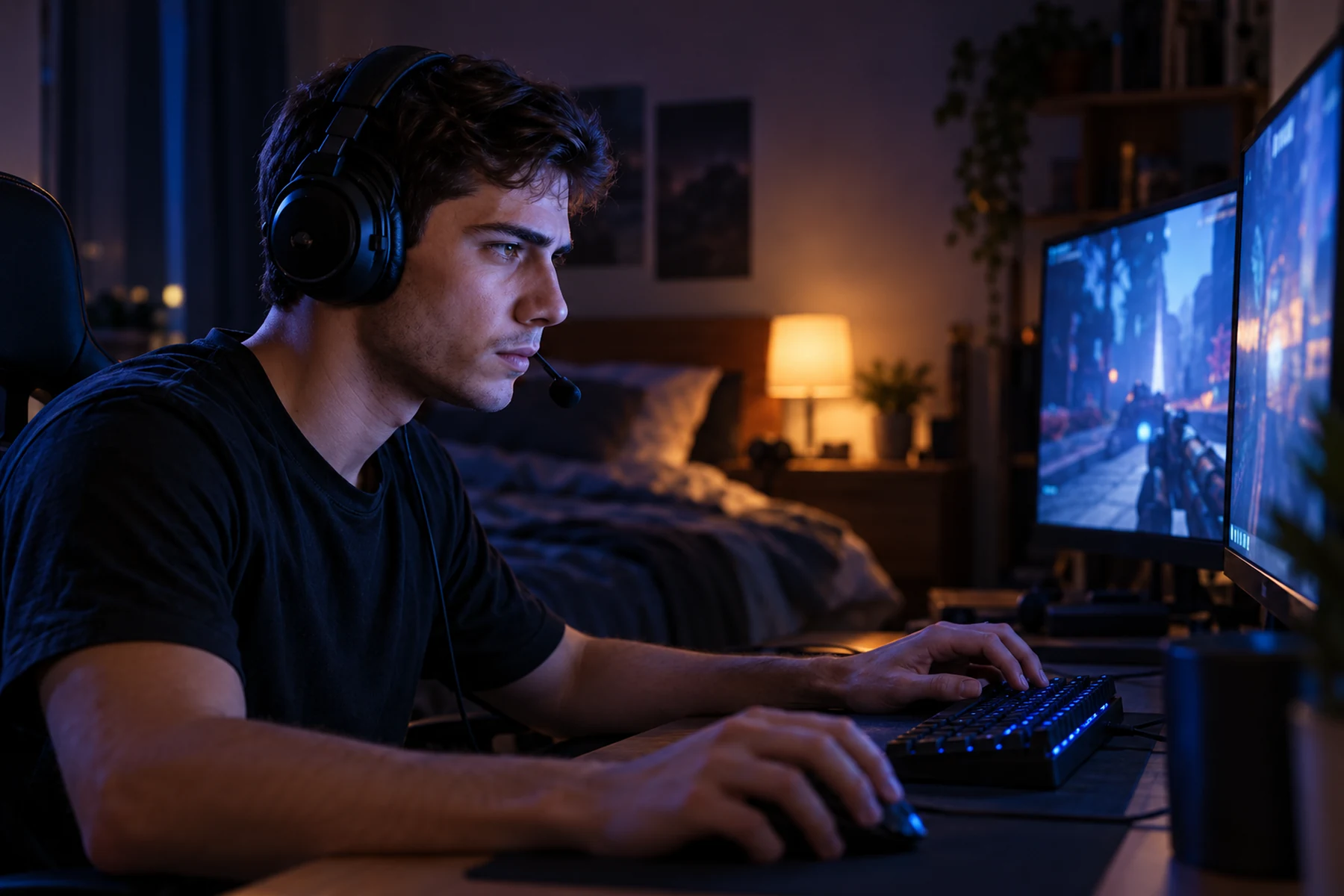
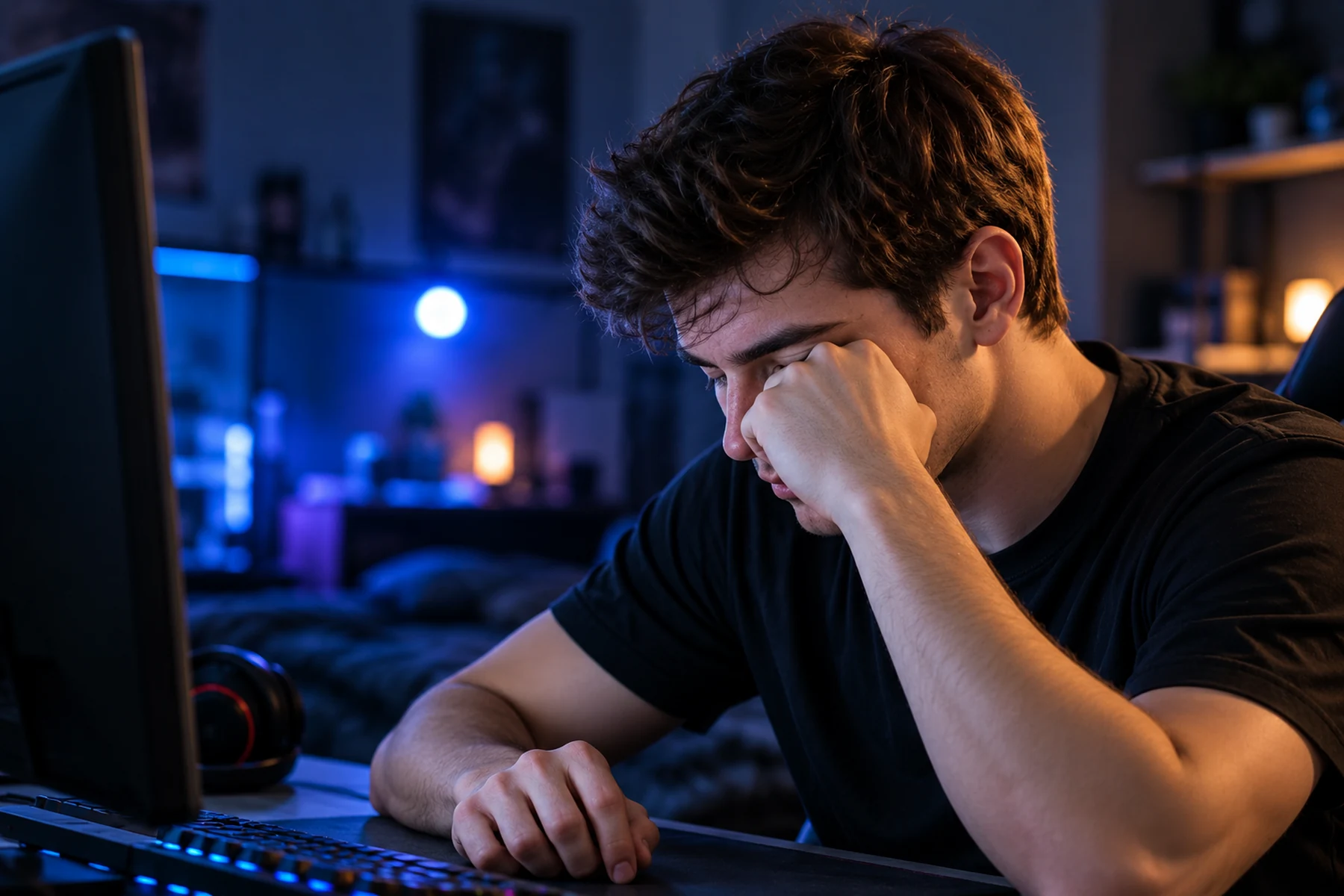
After four to six hours of sleep, performance may alternate between normal-looking stretches and brief lapses. Visual tracking, impulse control and reaction time become less dependable, which is why one good round can be followed by an avoidable error.
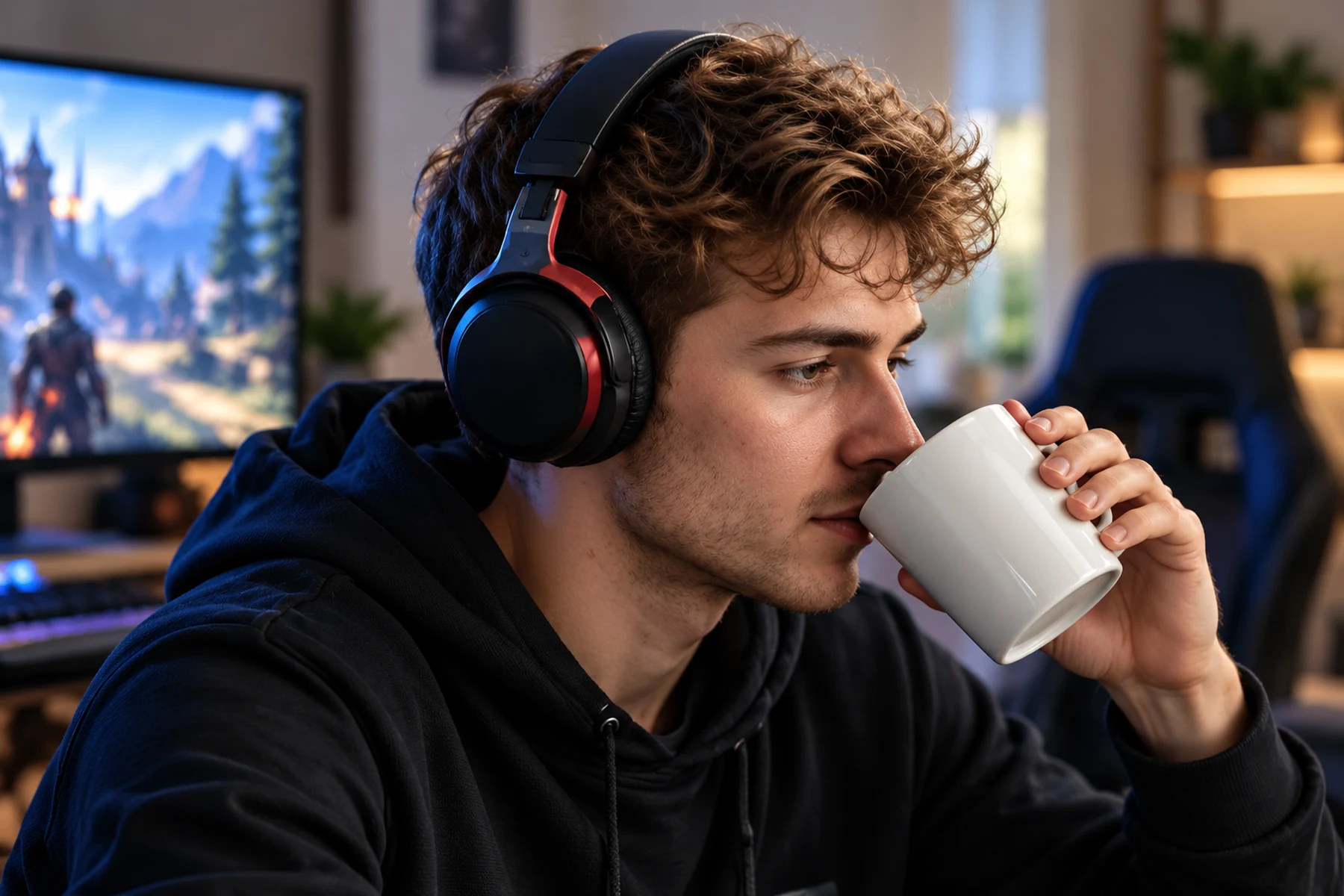
Caffeine may hide drowsiness, but it does not replace the sleep used to restore attention and consolidate motor learning. If the session matters, reducing its length or moving it is more reliable than trying to overpower the deficit with a larger dose.
Why Attention Becomes Unstable
Competitive video games require continuous high-speed cognitive processing. This means simultaneous visual scanning, spatial orientation, probability calculation, and millisecond-accurate mechanical execution. The central nervous system relies on restorative slow-wave and rapid eye movement sleep to repair synaptic structures. It must rebalance neurotransmitters and consolidate newly acquired motor patterns. When you lose out on these restorative phases, the neurological foundation of your gameplay crumbles. The damage manifests as delayed inputs, terrible crosshair placement, and poor utility usage.
When sleep is chronically restricted or acutely lost, the brain enters a state of cognitive instability. Rather than a steady decline in performance, the sleep-deprived brain oscillates unpredictably between moments of near-normal alertness and brief neurochemical lapses. This produces avoidable unforced errors during competitive play. Players might execute a complex rotation perfectly, only to miss a stationary target three seconds later. The inconsistency makes reliable improvement impossible.
Neurological fatigue specifically attacks the associative cortices responsible for rapid pattern recognition. In a tactical environment, this means you fail to parse audio cues and minimap information in real-time. The brain attempts to conserve energy by routing cognitive processing through less efficient neural pathways. This rerouting delays the translation of visual stimuli into mechanical action. You end up playing on a physiological delay that rivals terrible network ping.
State Instability and Psychomotor Micro Lapses
In cognitive neuroscience, the psychomotor vigilance task measures sustained attention and reaction speed. Under sleep deprivation, mean reaction time slows substantially. The defining hallmark is an exponential surge in lapses of attention, commonly known as microsleeps. These events are devastating in any competitive ladder environment. They bypass conscious awareness entirely, leaving the player confused about their own mistakes.
A microsleep is an involuntary intrusion of sleep-like theta or delta brainwave activity into the waking cerebral cortex. It lasts anywhere from five hundred milliseconds to three seconds. In everyday life, a half-second lapse is barely noticeable. In a high-stakes tactical shooter or fighting game, a five hundred millisecond freeze can mean an immediate death, missed trade kill, or failed defensive reaction. No amount of raw talent overcomes complete sensory shutdown.
Degradation of Saccadic Eye Movements and Visual Tracking
Fast-paced gaming demands continuous visual tracking across high-refresh-rate displays. This visual processing relies on two distinct ocular mechanisms. Rapid saccades shift gaze between screen elements, and smooth pursuit movements track moving enemies across the fovea centralis. Both systems require immense neurological energy to operate at peak efficiency. They are highly susceptible to sleep-related degradation.
Sleep deprivation profoundly disrupts the brainstem and cerebellar circuits governing ocular motor control. Saccadic peak velocity declines, target overshoot increases, and smooth pursuit breaks down into jerky corrective saccades. As a result, crosshair tracking appears jittery. Players struggle to track high-velocity enemy targets accurately. The eyes fail to relay smooth spatial data to the motor cortex.
Prefrontal Hypoactivation and Impulsive Tilt
Functional neuroimaging reveals that sleep loss causes immediate hypoactivation of the prefrontal cortex paired with functional disconnect from the amygdala. The prefrontal cortex is responsible for inhibitory control, counterfactual risk assessment, and working memory maintenance. The amygdala processes emotional responses and threat detection. Separating these two systems removes the brain's emotional brakes.
Without adequate prefrontal supervision, emotional and impulsive limbic circuits dominate behavior. Sleep-deprived competitors exhibit excessive risk-taking. They push dangerous angles without utility, ignore communication calls, and react with extreme emotional volatility to normal in-game setbacks. This neurological breakdown represents the primary biological mechanism behind severe competitive tilt. The player loses the ability to step back and rationally assess the gamestate.

Performance Does Not Decline in a Straight Line
Quantifying the relationship between sleep loss and cognitive degradation highlights why sleep is the single most potent mechanical performance variable. Every lost hour scales the severity of mechanical and tactical failures.
| Sleep Duration | Psychomotor Reaction Shift | Attentional Lapse Frequency | Competitive Gaming Consequence |
|---|---|---|---|
| 8 to 9 Hours | Baseline peak speed | Minimal lapse rate | Consistent tracking and emotional regulation |
| 6 Hours | 15 to 30 ms delay | Tripled micro lapse frequency | Delayed trade kills and positioning lapses |
| 4 Hours | 50 to 80 ms delay | Eightfold micro lapse surge | Frequent deaths to unseen flankers and tilt |
| 24 Hours Awake | Severe reaction delay | Continuous uncontrollable microsleeps | Total collapse of executive planning and aim |
Caffeine Hides Sleepiness; It Does Not Restore Control
The standard gaming response to inadequate sleep is consuming large doses of caffeine through energy drinks or coffee. Stimulants provide a temporary subjective illusion of wakefulness. They do not repair sleep-deprived cognitive deficits. The reliance on chemical energy creates a false sense of security that shatters during high-pressure late-game scenarios.
Adenosine Blockade Versus Synaptic Repair
Caffeine acts as an antagonist of adenosine receptors. By occupying these receptors, caffeine prevents circulating adenosine from binding and signaling homeostatic sleep drive to the ventrolateral preoptic nucleus. However, caffeine does not reduce the biological concentration of extracellular adenosine. It also fails to clear accumulated metabolic byproducts from cortical synapses. The brain remains toxic and fatigued underneath the stimulant mask.
Under heavy caffeine ingestion, a sleep-deprived player feels physically wired and jittery. Their prefrontal cortex remains functionally impaired. Working memory errors, calculation mistakes, and motor tracking variability persist despite elevated physiological alertness. You gain the energy to queue for another match, but lack the cognitive fidelity to actually win it.
Pay Back the Schedule, Not One Heroic Night
Sleep debt operates on a cumulative biological ledger. Losing two hours of sleep each night for five consecutive days produces cognitive impairments identical to staying awake for twenty-four consecutive hours. You cannot cheat the biological requirements of the central nervous system without facing a heavy performance tax.
Recover the Schedule Over Several Nights
Restoring baseline cognitive function requires consistent sleep extension over multiple consecutive nights. Extending sleep by thirty to sixty minutes each night while keeping wake times consistent stabilizes circadian alignment. This approach allows the brain to systematically restore deep slow-wave and rapid eye movement sleep architecture without triggering phase delays.
A Practical Recovery Sequence
Establishing consistent sleep hygiene habits protects cognitive endurance and ensures consistent mechanical performance across every competitive season. The biological baseline dictates the ceiling of your in-game potential.
- Maintain a consistent sleep window allowing seven and a half to nine hours of continuous rest nightly
- Keep wake-up times within a sixty-minute window across both weekdays and weekends to anchor the circadian rhythm
- Avoid using high-dose caffeine to override severe sleep debt during competitive tournament play
- Utilize a twenty-minute afternoon nap to temporarily restore psychomotor vigilance if sleep was restricted
- Avoid queuing for high-stakes ranked matches when operating on less than six hours of nocturnal sleep
- Expose your eyes to bright natural daylight within thirty minutes of waking to reinforce daily alertness cycles