What a Player Needs Before the First Map
Match-day preparation is not a last-minute strength workout. It is a short warm-up for circulation, hand temperature and precise movement, supported by regular aerobic and strength work during the week. In competition, action rates can be high and heart rate may rise sharply; the goal is to arrive warm without creating fatigue before the first map.
Why Warm Hands and a Calm Heart Rate Matter
Esports places specific physiological loads on your body that mirror traditional fine-motor disciplines. Gross muscular exhaustion rarely happens during a standard series. Instead, players endure prolonged sympathetic nervous system activation that drains cognitive reserves. Localized micro-trauma builds up in forearm flexor tendons. Sustained static postural loads challenge your back and neck stabilizers. You must address these stresses through structured athletic preparation.
Psychological stress on stage triggers the sympathetic adrenal-medullary axis almost immediately. Substantial adrenaline floods the system right as the match begins. Your blood pressure climbs steadily during close rounds. Peripheral vasoconstriction pulls blood away from your extremities. Hands and fingers turn cold when peripheral blood flow drops off. This directly impairs tactile mechanoreceptor sensitivity. Fine motor latency increases significantly right when you need instantaneous aiming adjustments.
Fine Motor Latency and Hand Temperature
Maintaining high actions per minute depends entirely on rapid motor unit recruitment. Your intrinsic hand muscles and extensor digitorum communis do the heavy lifting for every click. Nerve conduction velocity can fall when hand skin temperature drops below thirty degrees Celsius. Speed drops by one to two meters per second for every degree lost. You must maintain optimal hand perfusion and local muscle temperature. Cold hands quite literally mean slow reflexes in the server.
Mouse aiming and mechanical keyboard actuation involve endless repetitive micro-movements. These create friction within the synovial sheaths of your wrist. Missing out on structured tendon preparation increases the chance of problems later. Repetitive friction produces localized inflammation. Compressive neuropraxia sets in along the median and ulnar nerves, ruining your competitive ceiling.
Cardio Base and Autonomic Regulation
Esports competitors sit motionless while their cardiovascular systems endure extreme strain. Players with poor aerobic fitness experience prolonged sympathetic hyperarousal long after the round ends. Following a high-stress clutch, they remain tachycardic and shaky. Working memory suffers heavily under these conditions. Players become highly vulnerable to emotional tilt.
A solid aerobic foundation builds robust parasympathetic vagal tone. Between rounds, high vagal tone allows your heart rate to plummet toward baseline. Prefrontal cortex executive control returns online faster. You load into the next round mentally reset and physically calm, ready to execute complex strategies.
Train What the Setup Cannot Provide
A tournament-ready athletic baseline targets four functional physical components. Each one supports a specific mechanical requirement of top-level gaming. You cannot expect peak performance by ignoring any of these pillars.
| Physical Attribute | Competitive Impact | Target Training Modality | Weekly Frequency |
|---|---|---|---|
| Aerobic Foundation | Rapid heart rate recovery between clutch rounds and rounds | Zone two cardio at 60 to 70 percent max heart rate | 3 sessions of 30 to 40 minutes |
| Forearm and Grip Integrity | Resilience against flexor tendinopathy and nerve entrapment | Isometric pinches and eccentric wrist curls | 2 to 3 sessions of 15 minutes |
| Postural Scapular Endurance | Stable shoulder aiming platform and spinal alignment | Face pulls, band pull-aparts, and chest-supported rows | 2 sessions of 25 minutes |
| Thermal Motor Activation | Restores nerve conduction speed and finger agility | Active hand warm-ups and hot water hydrotherapy | Daily pre-match routine |
These components require dedicated attention outside of your standard scrim blocks.
A Match-Day Warm-Up by the Clock
Relying on aim trainers for your entire warm-up ignores the physiology behind motor execution. Never attempt high-velocity flick aiming on cold joints. A complete match-day warm-up follows a simple chronological progression. You start this sixty minutes before the lobby launches.
Systemic Blood Flow at Sixty Minutes Out
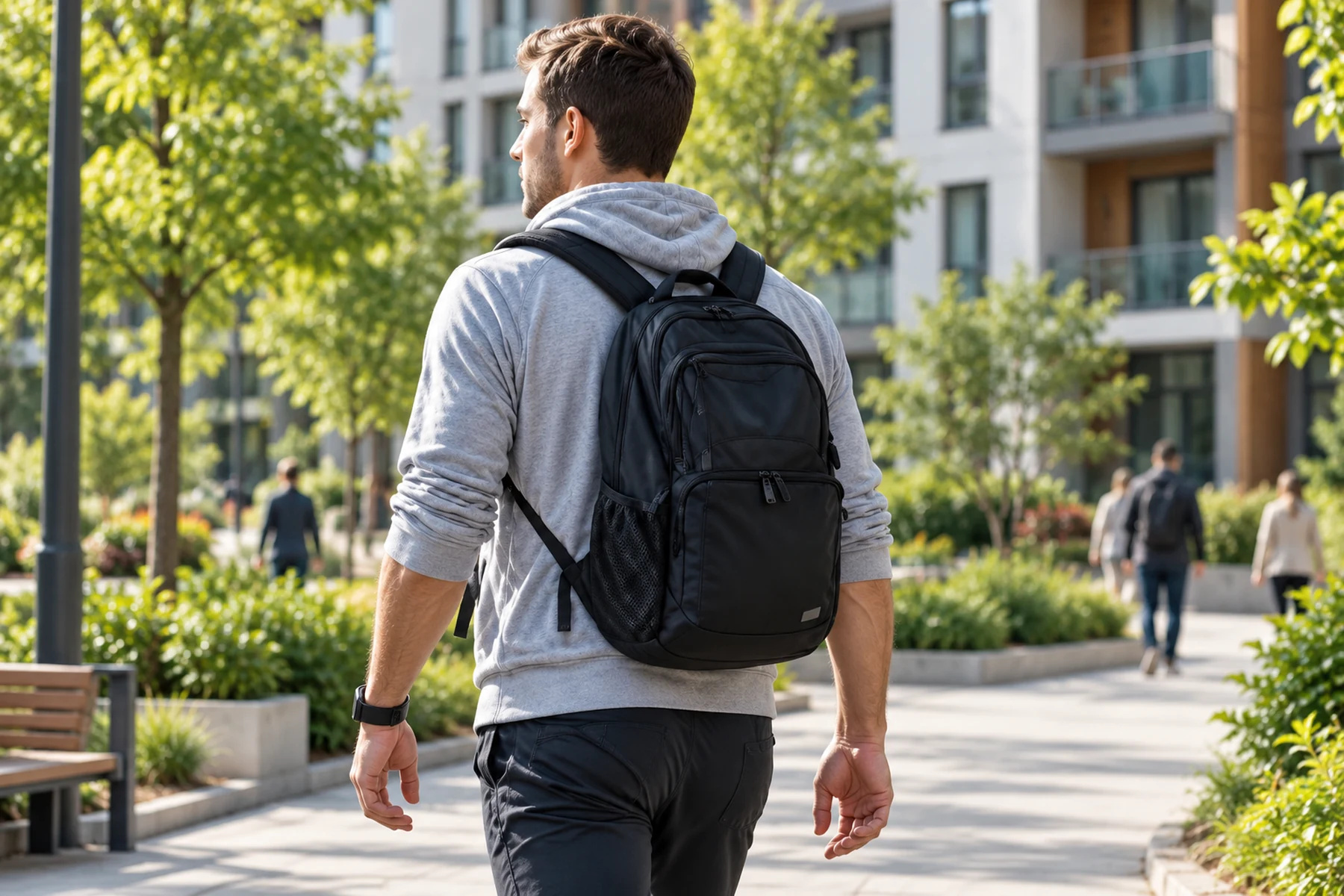
Get moving an hour before the match begins. Spend five to ten minutes doing low-impact cardiovascular work. Brisk walking or stationary cycling does the job perfectly. The goal involves raising your systemic core temperature by half a degree Celsius. This promotes global vasodilation. Blood starts moving into your hands and other peripheral tissues.
Thermal Elevation at Forty Minutes Out
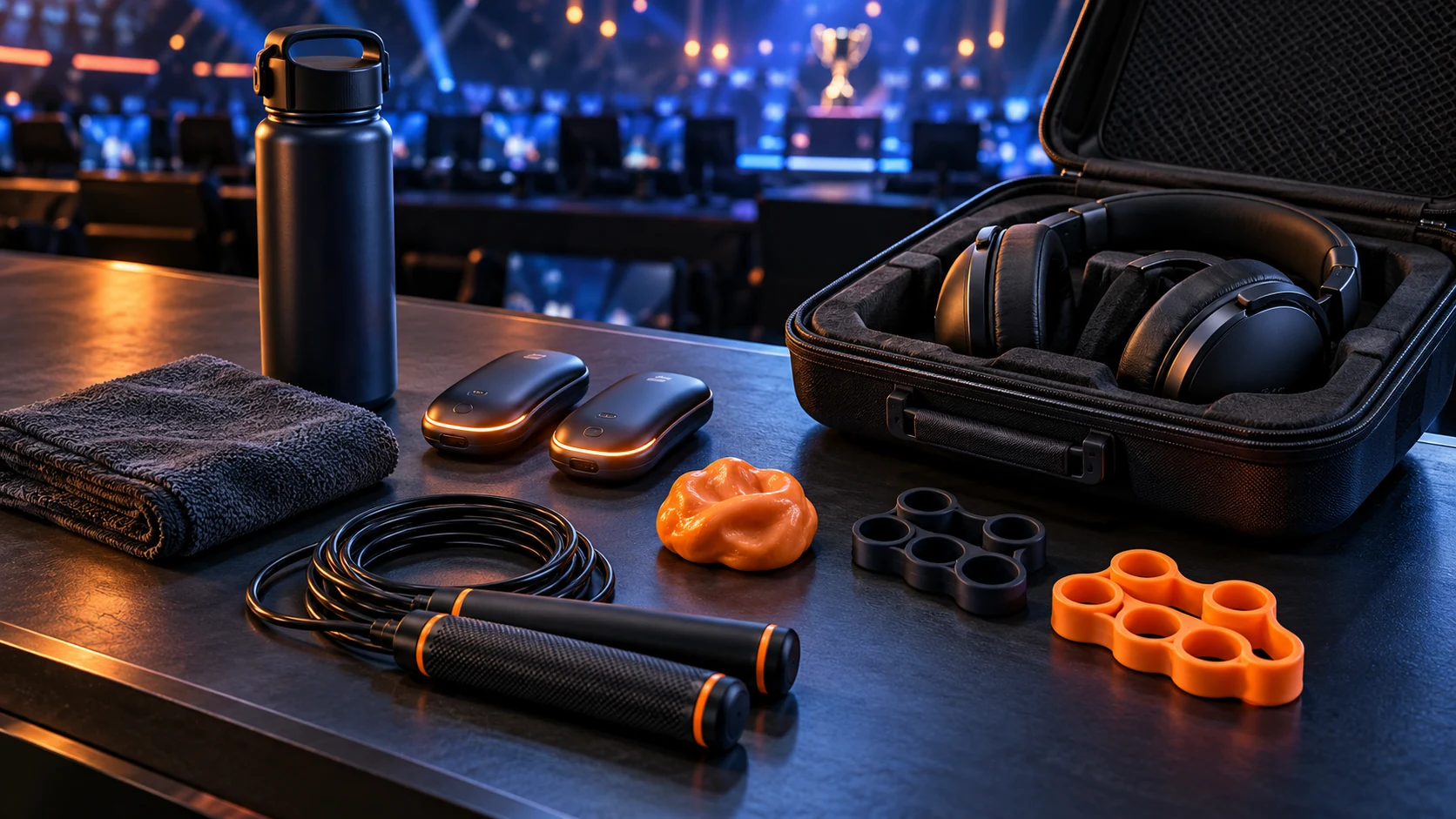
Focus directly on your upper extremities once your systemic temperature rises. Tournament venues often use strong air conditioning. Submerge your hands in warm water for three solid minutes. Rechargeable hand warmers offer an excellent alternative right at the desk. Move immediately into active finger tendon glides. Spread the digits wide. Curl into a hook fist. Roll into a full fist. Extend fully. Run through fifteen cycles.
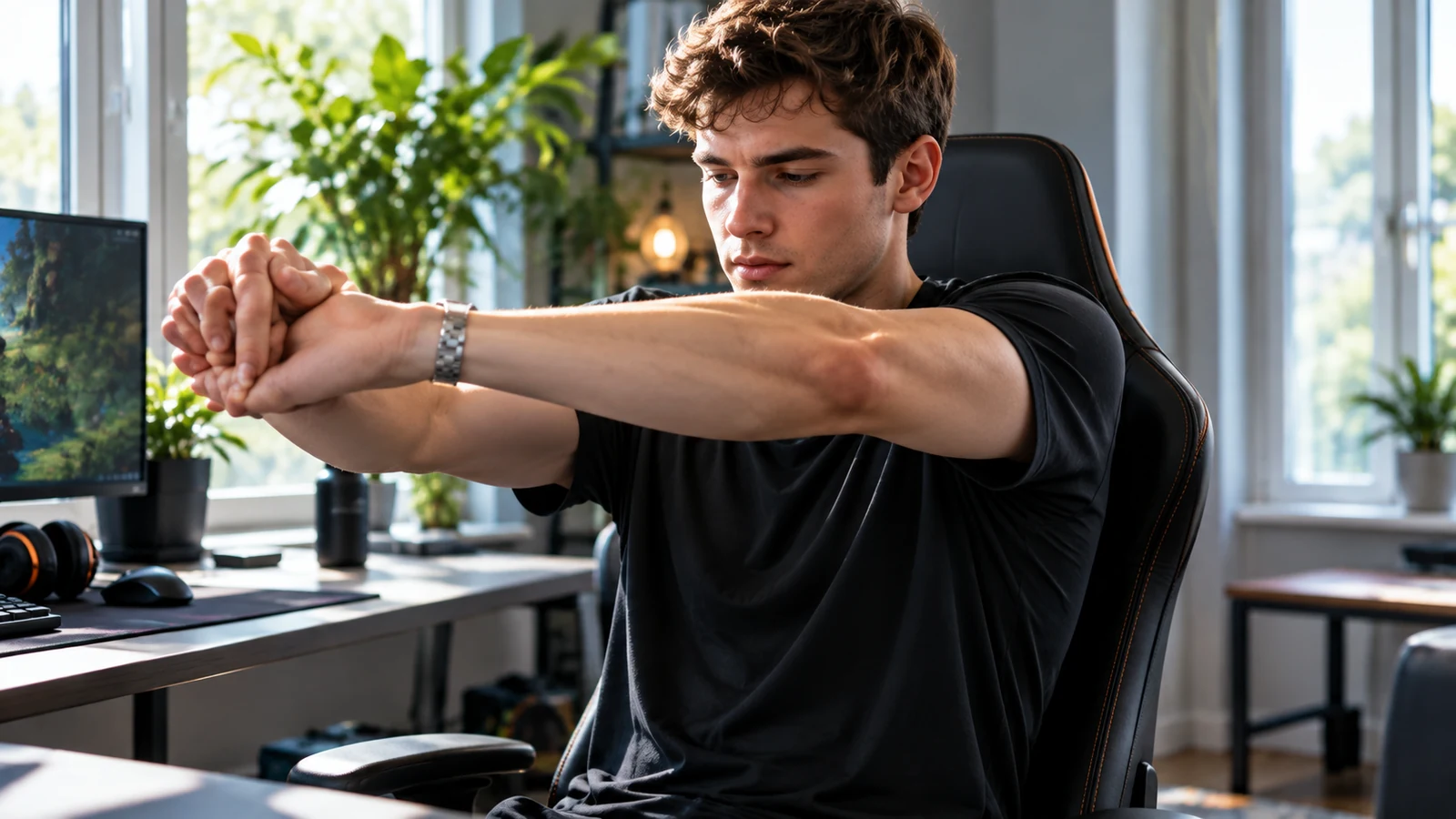
Execute forearm pronation and supination rotations carefully. Keep your arms extended at ninety degrees. This movement lubricates the radioulnar joints. You ensure unrestricted mouse sweeping mechanics without fighting elbow resistance.
Neural Activation at Twenty Minutes Out
Move to your competition battlestation twenty minutes before start time. Squeeze a soft stress ball or dynamic grip putty. Hit three-second bursts of maximum contraction. Repeat five times per hand. High-speed isometric hand contractions prime high-threshold motor unit recruitment. Your brain wakes up the specific pathways needed for rapid clicking.
Transition into ten minutes of calibrated aim drills. Do not chase maximum high scores here. Focus entirely on clean crosshair placement and smooth mechanical rhythm. Cement your neural firing patterns before loading into the official server.
Strength Work That Supports Mouse Control
A dedicated esports conditioning block must counteract the forward-head posture typical of long scrim days.
Prone Scapular Work
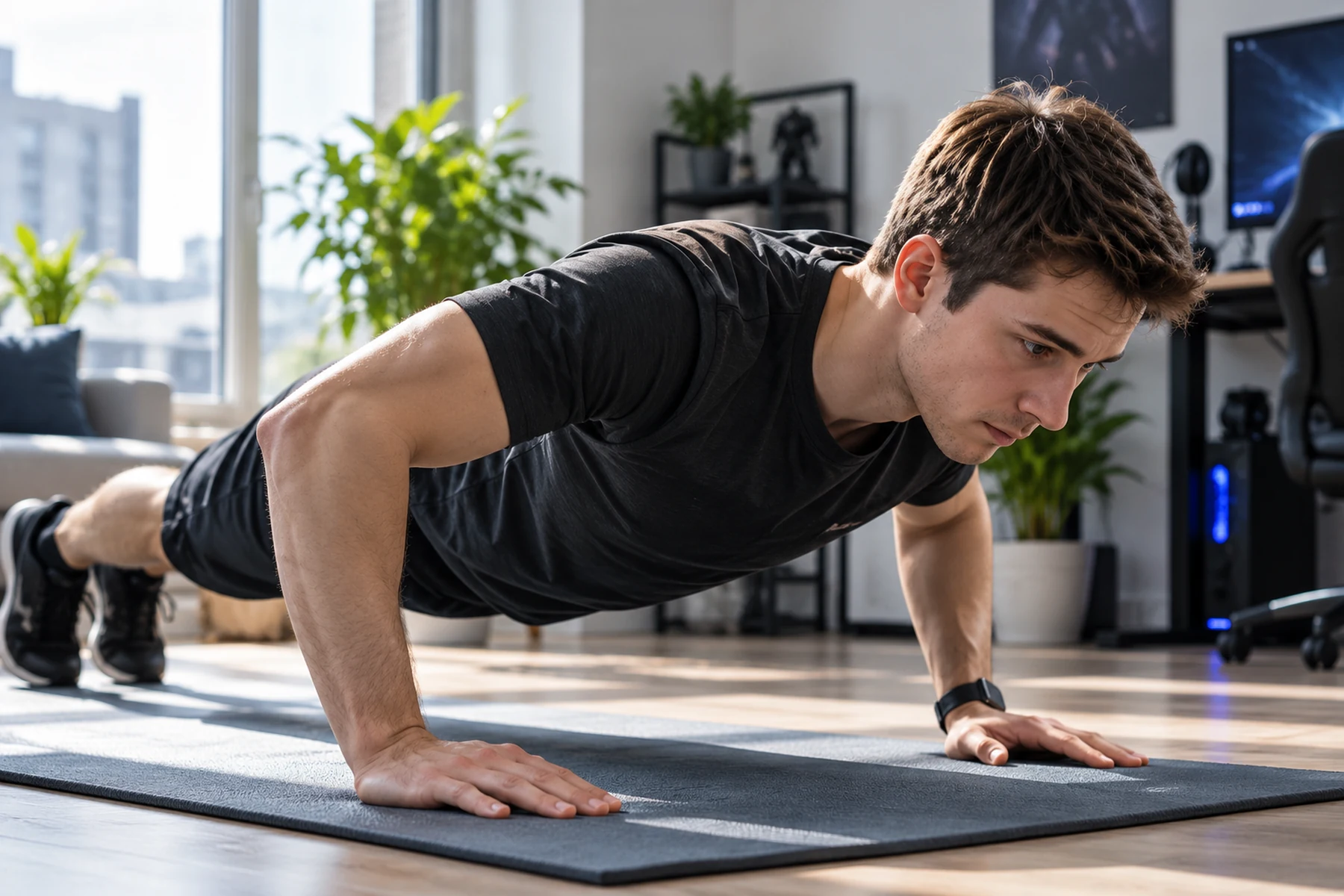
Lie face down on an incline bench. Raise your arms outward into a T position. Move them diagonally into a Y position with thumbs pointing straight up. Hold the peak contraction for two seconds. Your lower trapezius and posterior deltoids will fire hard. Run three sets of twelve repetitions twice a week. You will build a more stable shoulder girdle for consistent mouse tracking.
Eccentric Forearm Loading
Rest your forearm on a desk with your hand hanging off the edge. Hold a light dumbbell. Raise the weight quickly, then lower it over a strict three-second descent. Do twelve reps for wrist flexors with your palm up. Follow immediately with twelve reps for wrist extensors with your palm down. Eccentric loading forces collagen synthesis within the wrist tendons.
Heavy Carries for Postural Endurance
Grab two moderate weights. Hold them at your sides. Walk with perfectly upright posture for forty-five seconds. Retract and pull your shoulders down. Avoid rounding the spine. Perform three rounds of this carry. You will build the exact grip and trapezius endurance necessary to maintain steady arm mechanics deep into a series.
Between Maps: Restore Without Cooling Down Completely
Physical fatigue accumulates heavily across visual, postural, and neuromuscular systems during multi-hour brackets. Micro-recovery resets become mandatory survival tools.
Inter Map Breathing Resets
Disconnect visually from the monitor the absolute second a map concludes. Close your eyes immediately to rest the optic nerve. Perform two minutes of slow nasal diaphragmatic breathing. Inhale deeply for four seconds. Exhale slowly for six seconds. This exact breath pacing activates the parasympathetic branch of your nervous system.
Peripheral Re Warming Between Maps
Ten-minute broadcast intermissions offer a crucial recovery window. Place your hands straight back onto electronic hand warmers to fight off the venue chill. Vigorously rubbing your palms together works if you lack equipment. Execute gentle wrist flexion stretches to maintain tissue elasticity. Clear the accumulated mechanical tension inside your carpal and cubital tunnels.
What Teams Can Standardize
Structure and consistency dictate the success of physical preparation across an entire roster.
- Use a structured fifteen-minute physical warm-up before official scrimmages
- Supply the main practice room with quality hand warmers to combat peripheral vasoconstriction
- Schedule three weekly thirty-minute cardiovascular sessions outside of gaming hours
- Run two dedicated forearm strength blocks weekly to build lasting tendon resilience
- Schedule five minutes of physical movement between consecutive scrim blocks
- Establish mandatory post-match respiratory habits to transition safely out of intense states
- Monitor resting heart rates across the roster to identify early signs of systemic overtraining