Choose the Drink by What the Session Demands
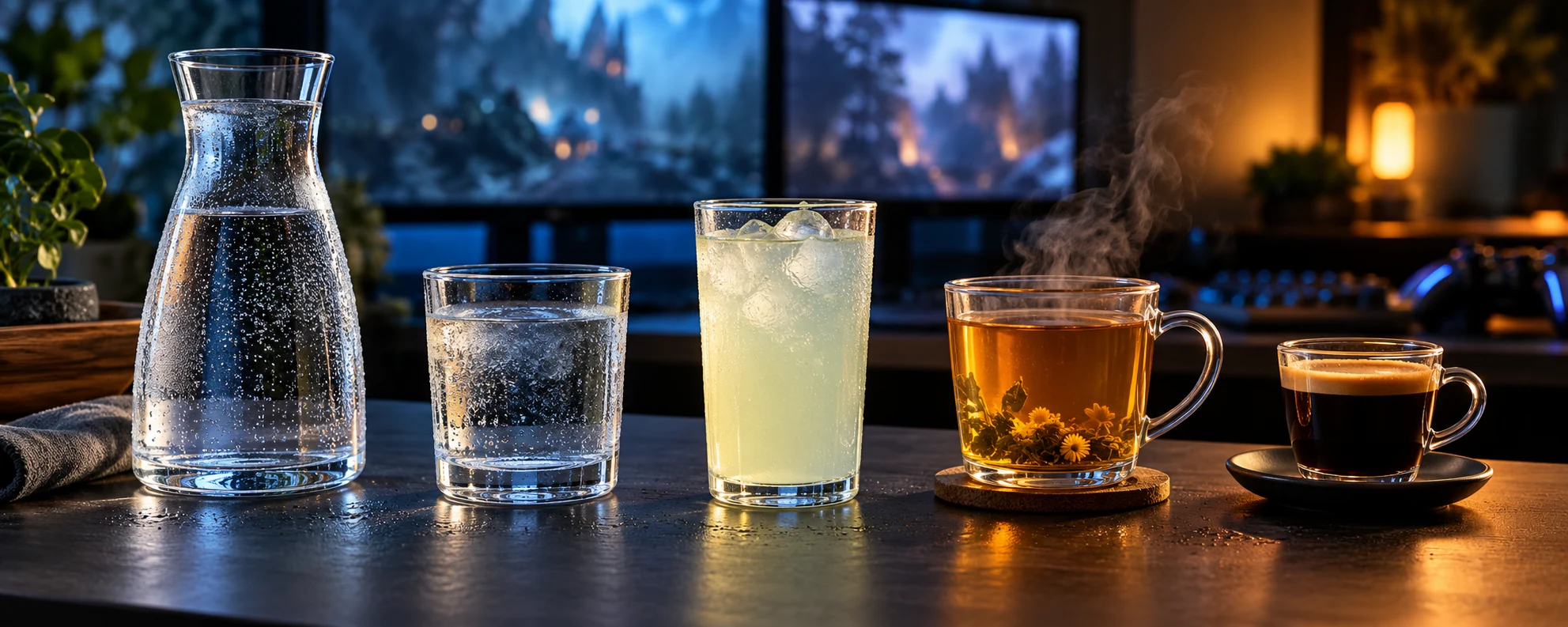
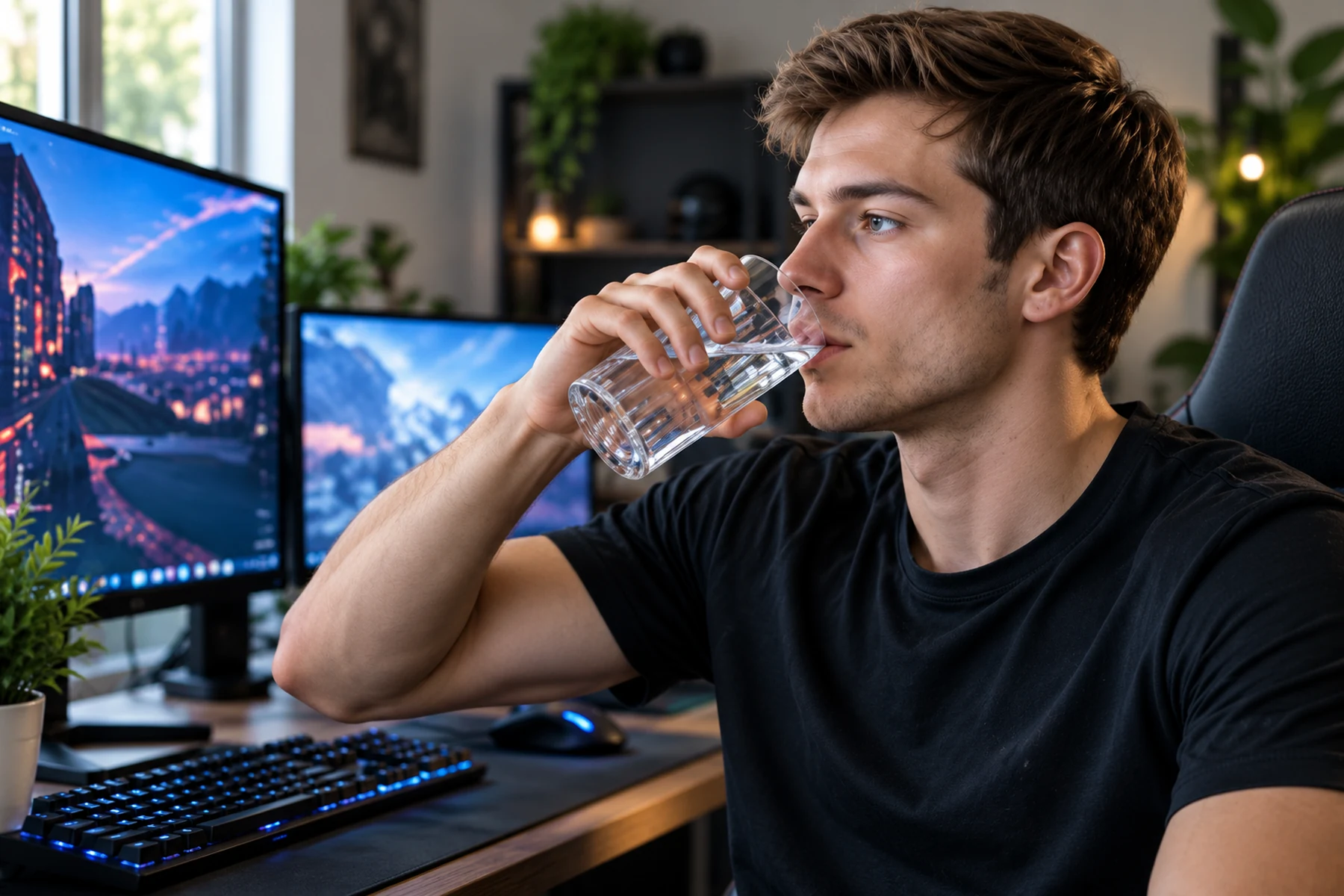
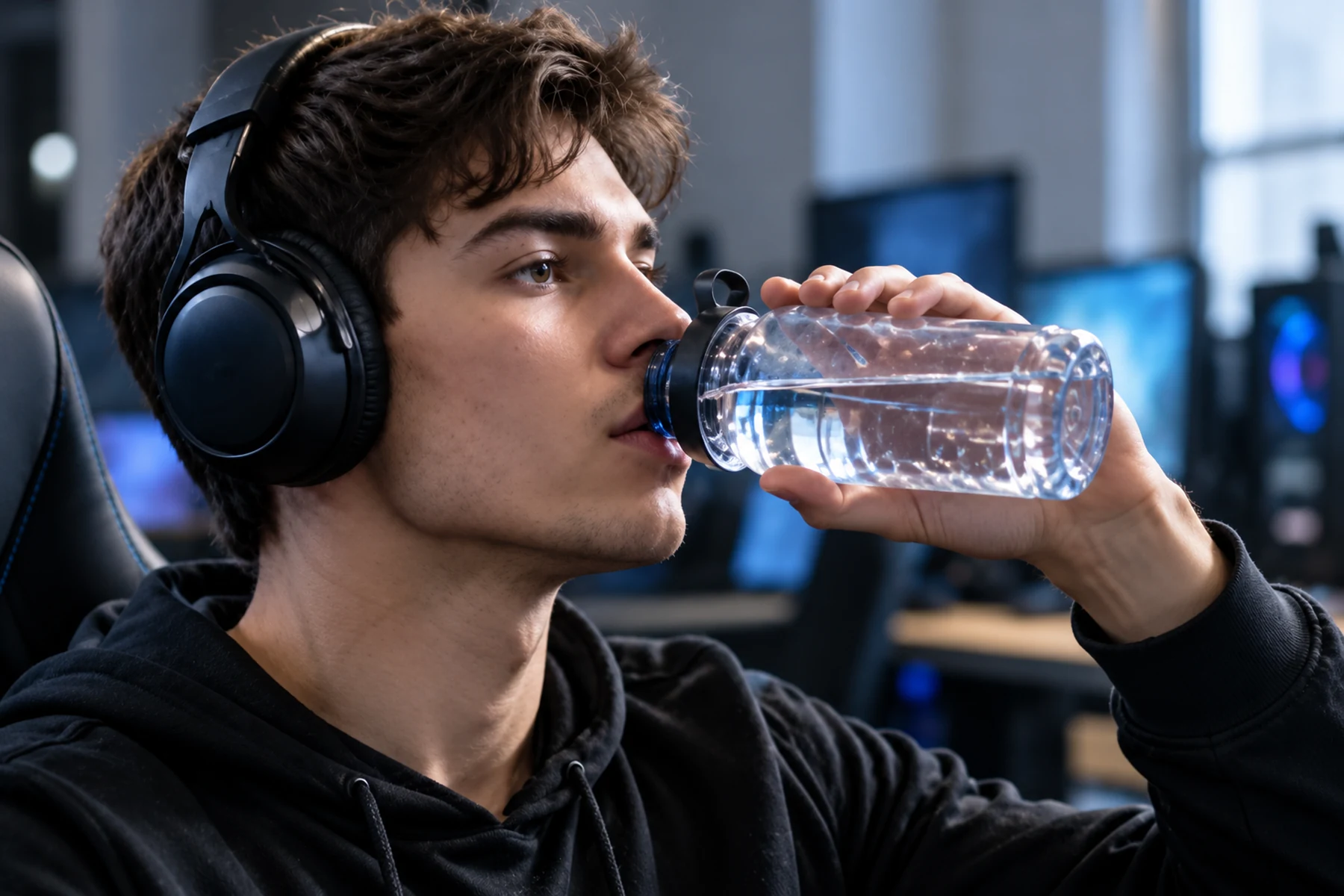
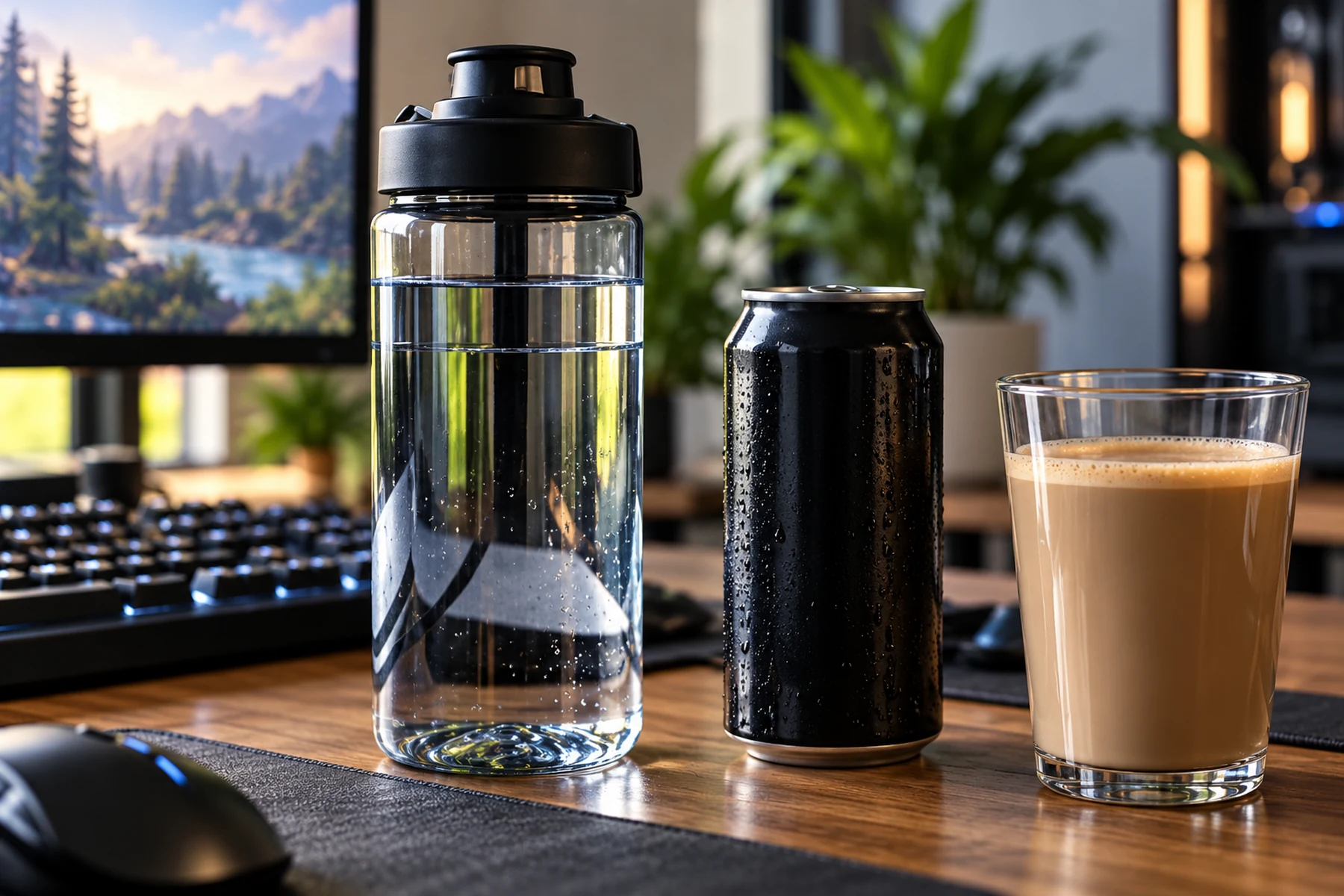
For a long, mostly sedentary session, lightly mineralized water is the default. Electrolytes become more relevant in heat or when sweating is noticeable; caffeine is a separate decision, not a hydration strategy. High-sugar drinks may also create a rise-and-fall pattern that feels worse late in the session.
Water Absorption Is Not the Slow Part
Sitting motionless in a gaming chair drastically alters gastrointestinal function. The digestive system typically relies on bodily movement to help process fluids and push them through the stomach. Without this mechanical assistance, gastric emptying slows down considerably. The chemical composition of what you drink takes over as the absolute primary factor dictating absorption speed.
Osmolarity determines how fast a beverage clears the stomach. This metric describes the concentration of dissolved solute particles per liter. Human blood plasma hovers around 280 to 290 milliosmoles per liter. Fluids matching or falling below this concentration move quickly past the pyloric sphincter. Highly concentrated fluids get stuck. The stomach holds them back, leading to acid reflux and a heavy bloated sensation that distracts from on-screen tracking.
Osmotic Gradients and Fluid Transit Speeds
Hypotonic drinks represent the gold standard for continuous desk hydration. Their osmolarity sits below 250 milliosmoles per liter. Because they contain a lower solute concentration than your own cellular fluid, osmotic pressure pulls the water rapidly across the intestinal membrane. You stay hydrated without feeling waterlogged. The fluid enters systemic circulation almost immediately, replenishing blood volume and ensuring rapid delivery of oxygen to the brain.
Glycemic Volatility and Cognitive Crashes
Downing a sugar-heavy drink causes immediate portal venous glucose spikes. The pancreas responds to this rapid influx by releasing insulin into the bloodstream. In an active athlete, working muscles burn through that sugar quickly. A seated gamer's muscles are largely dormant. The response can overshoot.
This biological reaction creates reactive hypoglycemia. Blood sugar crashes past baseline levels. The central nervous system registers acute energy starvation within sixty to ninety minutes of finishing the drink. Players lose their ability to process complex visual information. Callouts become sluggish. Fine motor control degrades and aiming precision completely falls apart just as the late-game pressure peaks.
Compare Beverages by the Problem They Solve
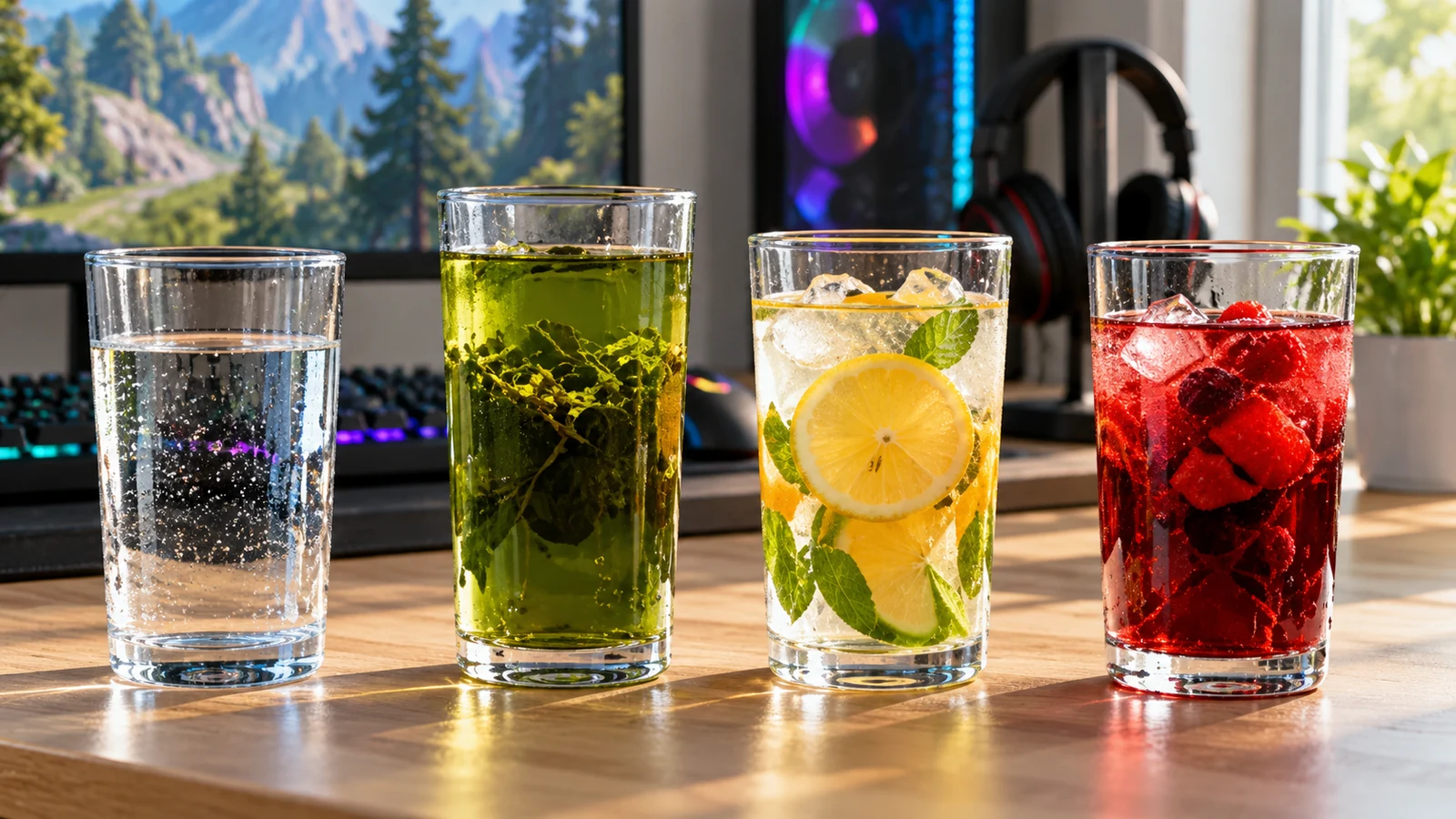
Evaluating drinks based on their biological impact isolates the best options for sustained ranked grinds.
| Beverage Category | Osmolality Profile | Stimulant Level | Optimal Session Window | Primary Physiological Risk |
|---|---|---|---|---|
| Filtered Mineral Water | Hypotonic (Under 100 mOsm/kg) | Zero | Universal throughout all session hours | Excessive intake without electrolytes can cause mineral flushing |
| Hypotonic Electrolyte Drink | Hypotonic (200 to 250 mOsm/kg) | Zero | Hours 3 through 10 of extended marathons | Overuse with high sodium in low-sweat environments |
| Green Tea or Matcha | Isotonic to Hypotonic | Moderate (30 to 50 mg) plus L-theanine | Opening hours of competitive play | Tannin sensitivity causing mild stomach acidity if fasted |
| Black Coffee | Hypotonic | Moderate to High (80 to 150 mg) | Initial 2 hours; morning or early afternoon only | Tremors, accelerated heart rate, gastrointestinal irritation |
| Commercial Energy Drinks | Hypertonic (350 to 500 mOsm/kg) | High (150 to 300 mg) | Limited use before high-stakes tournament finals | Severe crash, sleep disruption, sympathetic hyperarousal |
| Carbonated Sugary Sodas | Hypertonic (Over 500 mOsm/kg) | Low to Moderate (35 to 55 mg) | Not recommended for cognitive performance | Reactive hypoglycemia, gastric bloat, dental enamel erosion |
Caffeine Belongs in a Separate Decision
Timing your stimulant intake dictates whether you maintain peak performance or collapse halfway through a tournament bracket. Late caffeine consumption can disrupt restorative sleep. You might win the current match but your neurological recovery the next day will be severely compromised.
Green Tea and the L-Theanine Synergy
Green tea differs from many synthetic energy blends. The caffeine dose is relatively low, hovering around 30 to 50 milligrams. More importantly, it delivers significant quantities of L-theanine directly to the brain. This amino acid actively crosses the blood-brain barrier and binds to glutamate receptors.
L-theanine forces the brain into an alpha-wave state. The intense jitters and peripheral vasoconstriction usually caused by caffeine are entirely negated. Players experience sharp visual tracking and calm tactical communication. Your crosshair placement stays steady because the biochemical synergy eliminates the muscular tremors associated with high-dose stimulants.
Caffeine Timing and Adenosine Debt
Caffeine never actually gives you energy. The molecule physically wedges itself into the A1 and A2A receptors in your brain. It blocks adenosine from docking. Adenosine is the byproduct of cellular energy use that makes you feel tired. While you game under the influence of caffeine, that adenosine continues to build up in the background.
When Electrolytes Earn Their Place
Sitting in a climate-controlled room does not provoke the heavy sweat loss seen in physical sports. Yet cognitive strain and normal respiratory exhalation deplete essential minerals over a ten-hour period. Shifts in electrolyte balance quietly erode your reaction times.
Sodium and Intestinal Absorption
Sodium regulates the osmotic volume of your blood. Mixing a small amount of sodium—roughly 20 to 30 millimoles per liter—into your water activates the sodium-glucose cotransporter mechanism in your gut. This pathway actively pulls water molecules across the intestinal wall. Hydration becomes immediate.
Potassium and Magnesium for Neuromuscular Stability
Your nervous system relies on potassium and magnesium to maintain electrical gradients. These minerals allow nerves to communicate with muscle fibers. A drop in intracellular magnesium forces muscles to stay contracted. Tension builds rapidly in your neck, shoulders, and mouse-hand forearm.
What to Drink as the Session Gets Longer
Mapping out fluid intake based on the clock prevents self-sabotage. Structured hydration keeps your brain fueled and your hands steady.
Phase 1 Hours Zero to Two The Priming Window
Sit down at the desk fully hydrated. Drink 300 milliliters of water immediately. If you need a stimulant, this is the only acceptable window. A cup of matcha or a single coffee aligns peak plasma caffeine levels with the start of your matches.
Phase 2 Hours Three to Five The Sustained Hydration Window
Cut off all stimulants completely. Switch exclusively to hypotonic mineral water. Sip roughly 150 to 200 milliliters every 45 minutes. Grabbing another energy drink right now will spike your adrenergic tone.
Phase 3 Hour Six and Beyond The Decompression Window
Deep into a marathon run, your nervous system is heavily taxed. Shift to room-temperature water or warm herbal infusions like peppermint or chamomile. The temperature and lack of caffeine signal your sympathetic nervous system to begin spooling down. You sustain baseline hydration while preparing the brain for an eventual sleep cycle.
Set Up the Desk Before the First Match
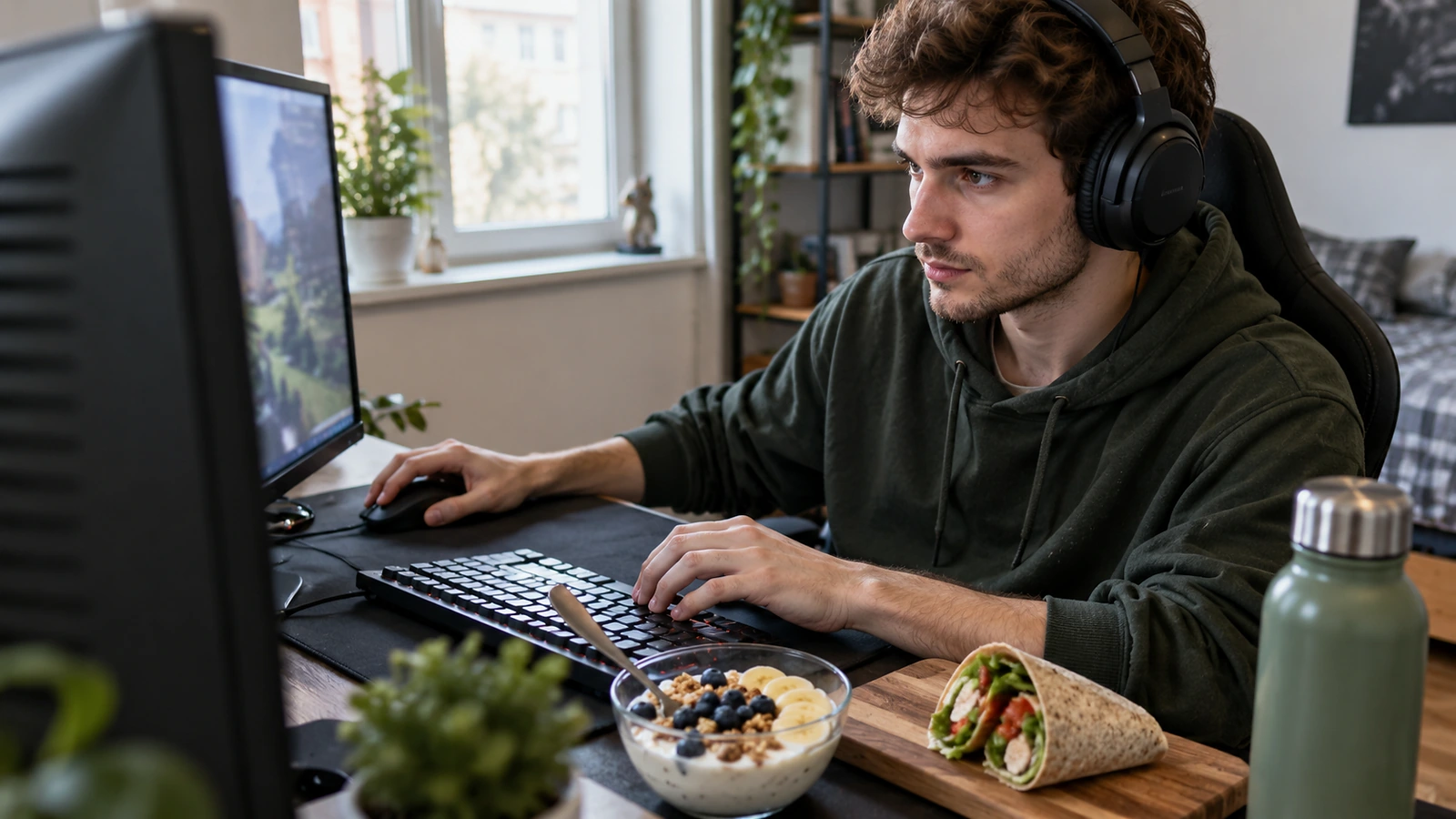
Engineering your physical environment removes the temptation to make bad nutritional choices between rounds.
- Fill an insulated bottle with water and add a measured amount of mineral salts before queuing up
- Enforce a hard cutoff for all caffeinated drinks exactly 90 minutes after sitting down
- Keep a dedicated thermos nearby for warm non-caffeinated tea during late-night brackets
- Physically remove all soda cans and energy drink stock from the gaming room
- Drink specific measured amounts during queue times instead of chugging randomly
- Transition to pure water or herbal alternatives no less than six hours before your planned bedtime