Protect the Week, Not Just the Final Night
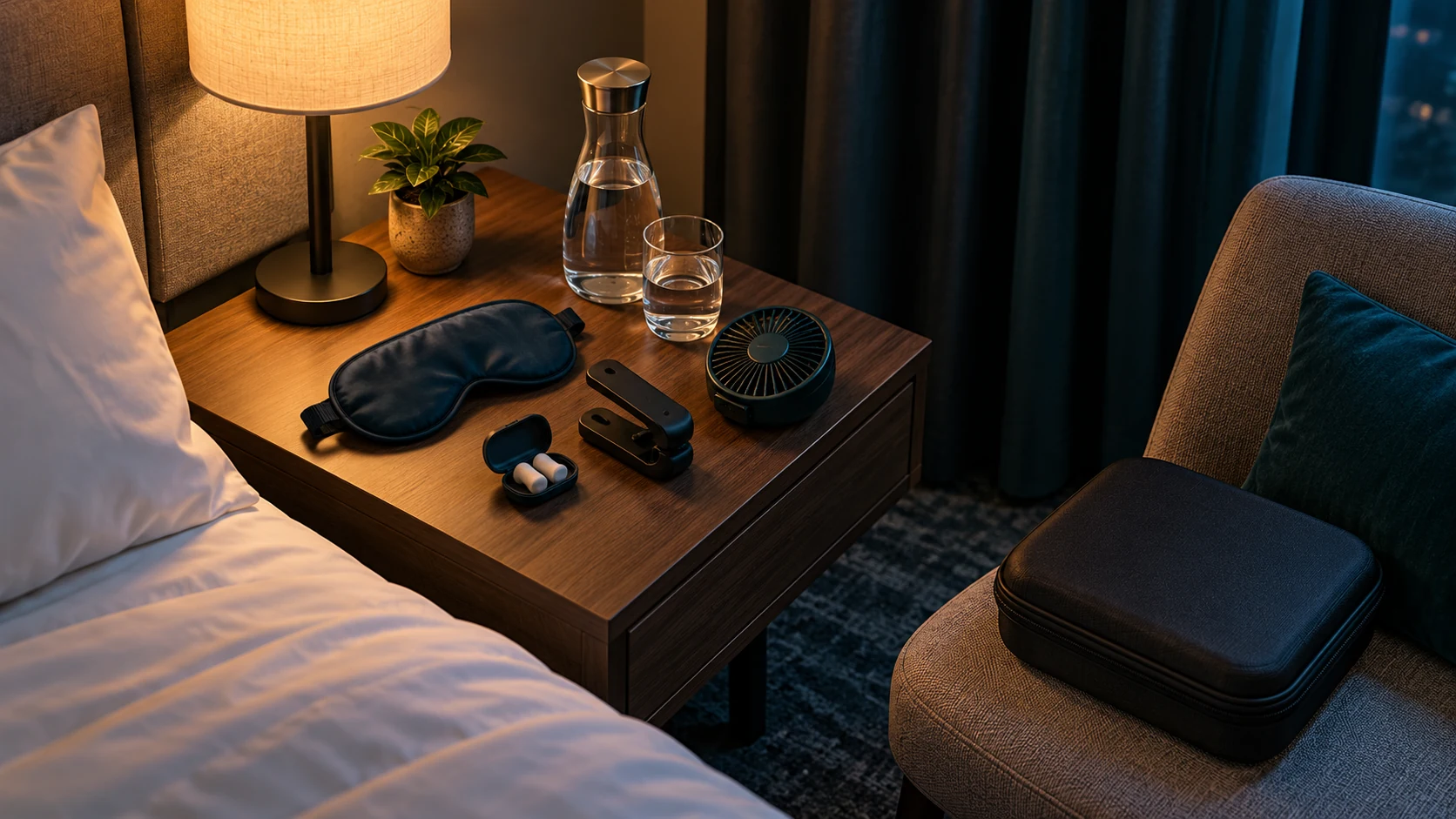
The final night is often the least controllable one: anxiety is higher, the room may be unfamiliar and the schedule has already changed. Protect sleep across the preceding five to seven days so that one imperfect night carries less weight. Then make the hotel room familiar, set the caffeine cutoff in advance and write down tactical reminders before the wind-down begins.
Trying Harder to Sleep Can Keep You Awake
The night before a major qualifier or stage match is notorious for poor sleep quality. Recognizing that peak alertness is required the following day triggers sympathetic nervous system activation, driving up nocturnal cortisol. This autonomic shift makes initiating sleep mechanically difficult.
Athletes lying awake worrying about lost sleep accelerate performance anxiety. Acute one-night sleep disruption has minimal impact on fine motor mechanics as long as the player built a physiological buffer during the preceding week. Acknowledging this fact immediately reduces the psychological urgency that fuels pre-game insomnia.
Cortical arousal limits slow-wave sleep access. High-frequency beta waves dominate the electroencephalogram when players attempt to force sleep through sheer willpower. Shifting to passive observation of the room environment without trying to fall asleep often paradoxically invites the onset of sleep.
Anticipatory Stress and Somatic Hyperarousal
Anticipatory stress forces continuous cognitive simulation. Players mentally rehearse tactical executions, analyze difficult match drafts, or fixate on potential mechanical errors. This elevated cortical activity maintains beta and gamma brainwave states that directly block the slow alpha and theta rhythms necessary for sleep onset.
Somatic hyperarousal simultaneously elevates baseline muscle tension, increases resting heart rate, and causes peripheral vasoconstriction. Forcing sleep in this heightened state is neurologically impossible. Competitors must deploy targeted behavioral protocols to push autonomic balance toward parasympathetic dominance.
The First-Night Effect in Tournament Hotels
Traveling to LAN events forces competitors into unfamiliar sleeping environments. Sleep medicine identifies this as the first-night effect. The left hemisphere of the brain remains in a state of vigilant half-alertness to continuously monitor the unfamiliar surroundings for potential threats.
Slow-wave sleep becomes fragmented in this vigilant state. Athletes awaken frequently in response to minor ambient sounds, unfamiliar HVAC clicks, or subtle differences in mattress firmness. Overcoming this effect demands active environmental stabilization and sensory manipulation.
The Useful Work Happens During the Week
Systematically preparing the nervous system for competition requires a multi-day timeline that eliminates reliance on luck during competition eve.
T-Minus 7 to 3 Days targets sleep banking and synaptic waste clearance. Extend time in bed by 60 to 90 minutes nightly. Late-night panic scrims and marathon strategy sessions must be eliminated.
T-Minus 2 Days serves as the critical anchor night. Aim for 8.5 hours of uninterrupted rest. Do not stay up late celebrating travel arrival or socializing with other teams.
T-Minus 1 Day focuses on autonomic stabilization and mental offloading. Implement a 10-hour caffeine cutoff and utilize offloading journaling. Do not consume sleep medication or alcohol in an attempt to force sleep onset.
Match Day Morning focuses on clearing sleep inertia and circadian activation. Awaken 2.5 hours pre-match with direct solar light exposure.
Extra Sleep Before Travel Can Buy Resilience
Sleep banking is the deliberate extension of nightly sleep duration prior to an anticipated period of sleep restriction. Accumulating extra slow-wave and rapid eye movement sleep across five to seven days establishes durable neurobiological reserves.
Athletes who bank sleep maintain baseline psychomotor reaction time, visual attention, and executive function even after experiencing partial sleep restriction on competition eve. If a player banks sleep all week, sleeping only five or six restless hours before their championship match yields virtually zero measurable degradation in mechanical flick-aiming or tactical calculations.
Knowing that you protected sleep earlier reduces the anxious thinking that occurs when lying awake at 2 AM. This breaks the self-fulfilling cycle of insomnia driven by performance anxiety.
Make the Unfamiliar Room Boring
Arriving at tournament hotels requires converting unfamiliar rooms into biologically neutral sleep environments through systematic environmental control.
Acoustic and Photic Standardization
Hotel environments present unpredictable light leaks and hallway noises. Pack high-grade foam earplugs or run a dedicated white-noise application at sixty decibels to mask transient corridor sounds. Use magnetic clips or hotel clothes hangers with clips to clamp blackout curtains completely shut to eliminate stray streetlamp glare.
Standby lights from televisions, smoke detectors, and charging equipment introduce low-level photic disruption. Apply electrical tape over these LEDs. Even minimal ambient light penetrating closed eyelids can suppress endogenous melatonin production during the critical first half of the night.
Thermal Regulation and Sensory Anchors
Set hotel room thermostats to eighteen degrees Celsius (sixty-four to sixty-six degrees Fahrenheit). Many hotel air units run excessively dry. Place a damp towel near the air vent if the room air causes nasal irritation. Bringing your personal pillowcase or travel pillow provides a familiar tactile and olfactory anchor, reassuring subconscious brainstem circuits that the sleeping environment is secure.
Competition Eve: Reduce Decisions
The final three hours before bed on competition eve dictate how effectively the autonomic nervous system down-regulates from competitive hyperarousal.
The Ten-Hour Caffeine Cutoff Rule
Caffeine exhibits an average elimination half-life of four to six hours and a quarter-life of up to twelve hours. If a player consumes an energy drink at 4 PM, twenty-five percent of that caffeine remains actively binding adenosine receptors at 2 AM. Enforce a strict caffeine curfew at least ten hours prior to bedtime on the night before tournament matches.
Hidden caffeine sources undermine the cutoff rule. Dark chocolate, certain pre-workout formulations disguised as vitamin supplements, and specific decaffeinated beverages contain enough residual xanthines to disrupt the fragile pre-competition sleep architecture.
Cognitive Offloading Through Journaling
Two hours before sleep, sit with a physical notebook away from all screens. Spend ten minutes writing down every tactical concern, match scenario, agent lineup, and logistical detail scheduled for tomorrow. Externalizing working memory onto paper offloads the prefrontal cortex, reducing nocturnal cognitive rumination and shortening sleep onset latency.
Structured journaling focuses the mind. Divide the page into actionable and non-actionable items. Actionable items receive a concrete execution plan for the next morning. Non-actionable items are acknowledged and discarded. This categorization prevents cyclical worrying about factors outside the player's control.
Diaphragmatic Down-Regulation
If heart rate remains elevated once in bed, execute ten minutes of slow diaphragmatic breathing. Inhale for four seconds through the nose and exhale for six seconds through slightly parted lips. Prolonged exhalations activate the cardiac vagal branch, decelerating heart rate and signaling the brain that it is safe to enter slow-wave sleep.
On Match Morning, Wake the System Gradually
Waking up too close to match time is as detrimental as sleep deprivation. Sleep inertia refers to the temporary state of grogginess, slowed reaction speed, and impaired working memory experienced immediately upon waking.
Sleep inertia requires sixty to ninety minutes to dissipate naturally as adenosine clears and cerebral blood flow velocity normalizes. Schedule wake-up times at least two and a half to three hours before official tournament play begins. Expose the eyes to natural morning daylight immediately, drink five hundred milliliters of mineralized water, and perform five minutes of light physical mobility to ensure the central nervous system is fully calibrated before taking the stage.
Cold water exposure can help reduce sleep inertia. Splashing the face with ice water triggers the mammalian dive reflex, instantly activating the sympathetic nervous system and driving oxygenated blood to the brain. This physical shock overrides the residual grogginess of incomplete sleep cycles.
What to Pack and What to Repeat
- Bank sleep five to seven days prior to the tournament by going to bed forty-five minutes earlier
- Protect two nights before the competition as the critical restorative sleep window
- Enforce an absolute caffeine cutoff ten hours before planned sleep on tournament eve
- Write down match strategies and logistical details in a physical notebook two hours before bed
- Seal hotel blackout curtains and utilize white noise to neutralize unfamiliar hotel environments
- Execute diaphragmatic breathing to lower heart rate if arousal remains high in bed
- Wake up at least two and a half hours before stage time to liquidate morning sleep inertia
- Bring familiar pillowcases or travel pillows to bypass the neurological first-night effect