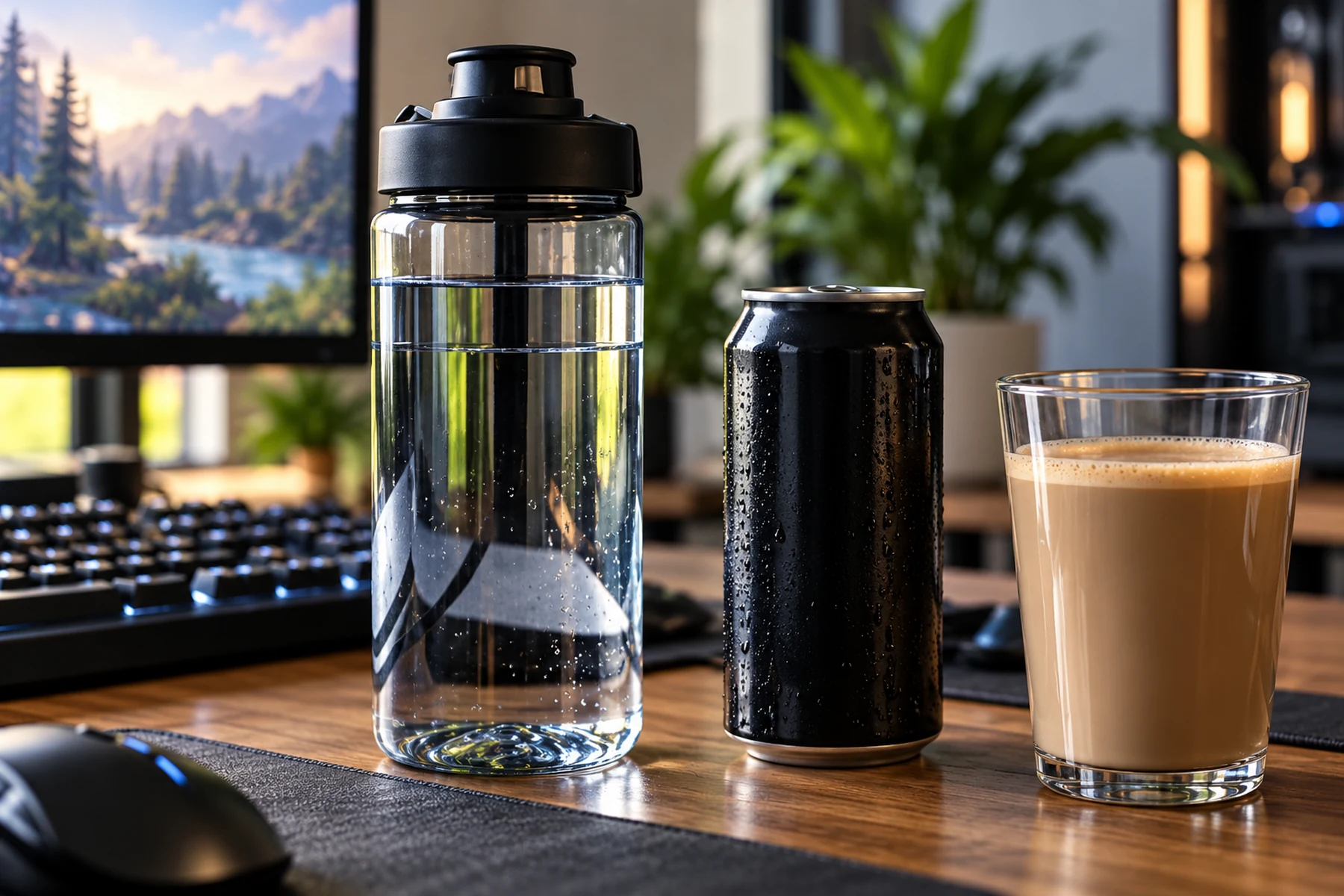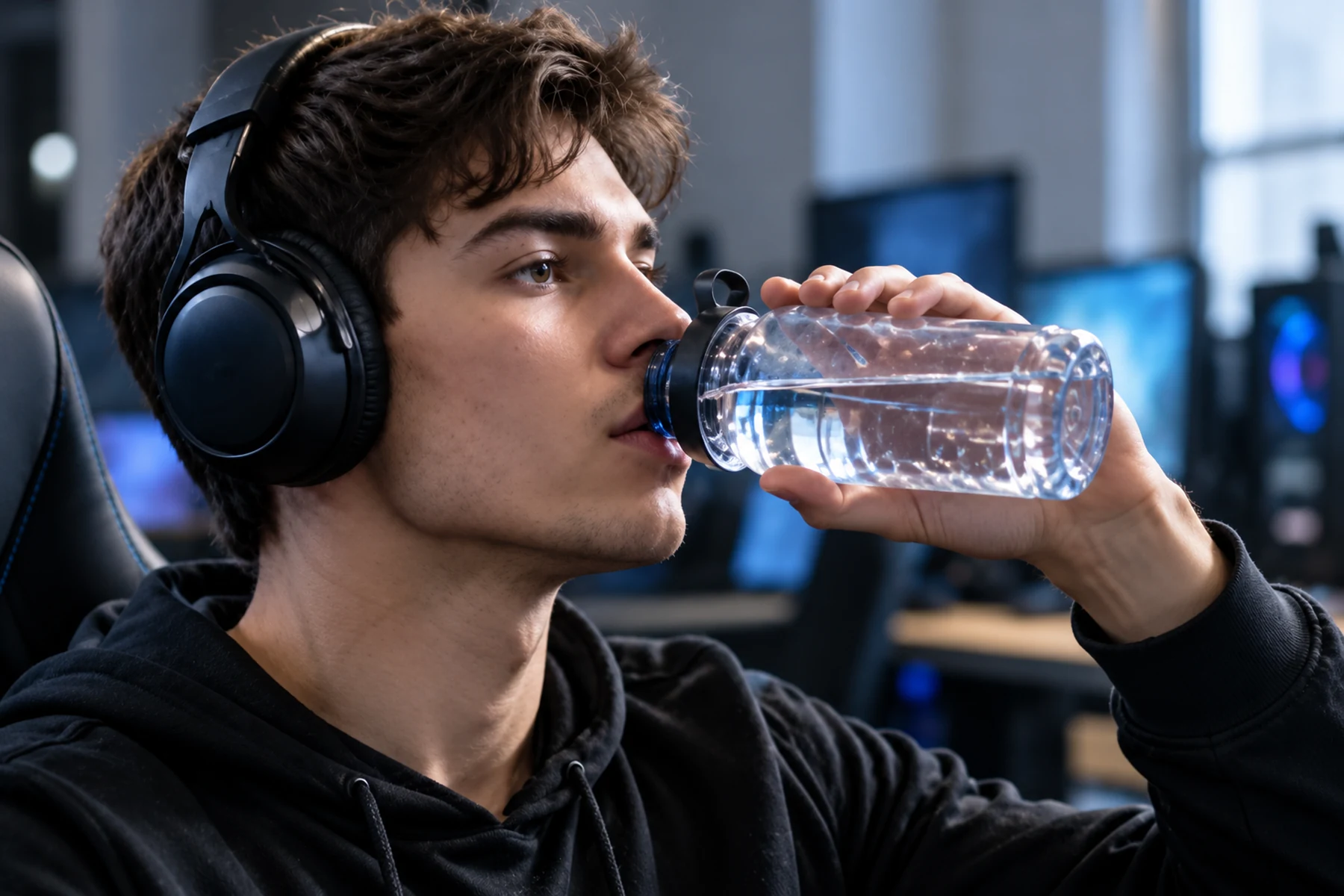
Plan Around Check-In, Warm-Up and Map Breaks
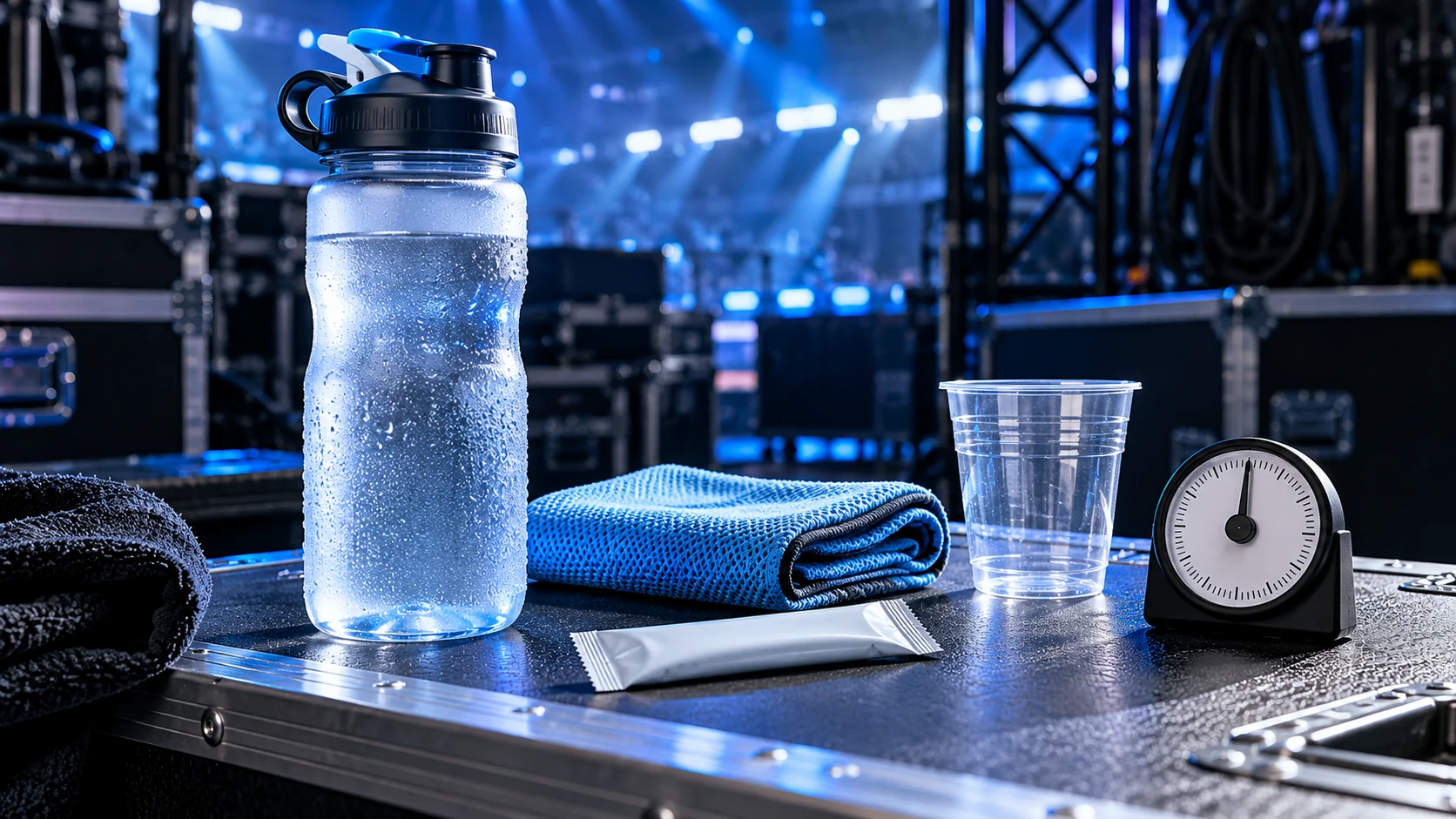
Tournament hydration has to fit the schedule. Arriving thirsty is unhelpful, but drinking a large volume immediately before stage time can create its own distraction. Drink normally in the hours before check-in, use the bathroom before warm-up, and take small drinks between maps rather than improvising during play.
Stage Play Changes the Hydration Problem
Live esports environments force players to withstand physiological stressors distinct from casual grinding. Broadcast lighting rigs steadily elevate ambient temperature. Soundproof enclosures and arena air filtration systems actively pull moisture out of the air, maintaining an artificially low relative humidity that drastically increases insensible fluid loss through respiration and skin evaporation.
Psychological pressure continuously activates the sympathetic adrenal axis during critical rounds. This stress response induces rapid shallow breathing and an elevated heart rate, stripping away internal moisture. During a best of five series, a competitor can lose over one percent of total body mass purely through respiratory evaporation and nervous sweating.
Pre Match Anxiety and Detrusor Muscle Hyperactivity
Competitive anxiety stimulates the sympathetic nervous system, increasing the resting tone of the bladder wall detrusor muscle. This heightened tension creates a false sensation of urinary urgency even when actual bladder volume remains low.
When players respond to this phantom urgency by withholding water, they step onto the stage in a hypohydrated state. As the series grinds deeper into late maps, circulating plasma volume inevitably drops. This reduction decreases cerebral oxygen delivery, compounds mental fatigue, and degrades fine motor adjustments required for executing mechanical combos.
Cognitive Degradation and Information Processing
High level esports execution relies entirely on continuous parallel processing. Players must track enemy cooldowns, monitor shifting minimap positions, and execute millisecond accurate inputs. Mild dehydration impairs prefrontal cortex networks responsible for managing this coordination.
Once cellular dehydration crosses the threshold of one point five percent body mass loss, visual motor reaction time reliably slows. Target tracking variance increases, leading to inconsistent crosshair placement and compromised flick shot accuracy. In tactical shooters, this latency difference consistently determines round outcomes.

A Timeline That Avoids Both Thirst and Urgency
Achieving stable hydration throughout a tournament series requires synchronizing fluid volumes with the broadcast schedule. The timing of fluid intake dictates whether ingested water is retained intracellularly or processed into distracting bladder pressure.
T Minus 90 Minutes The Hyperhydration Pre Load
Ninety minutes prior to taking the stage, competitors should consume four hundred to five hundred milliliters of a hypotonic fluid containing adequate sodium. The presence of dietary sodium actively facilitates rapid intestinal absorption. This composition promotes fluid expansion within the vascular space without triggering an acute diuretic response from the kidneys.
T Minus 30 Minutes The Bladder Evacuation Window
Administering the primary fluid load ninety minutes prior gives the renal system sufficient time to safely excrete transient excess fluid into the bladder. Thirty minutes before the scheduled stage entry, players must execute a complete urinary void. Following this timeline ensures circulating plasma volume remains expanded, intracellular compartments are saturated, and the bladder is empty before the opening map begins.
Map Intermissions The Controlled Micro Sip
During competitive play, the strategy shifts to consuming very small sips of seventy five to one hundred twenty five milliliters between maps or during broadcast intermissions. Micro sipping strictly prevents gastric distension, keeping the stomach comfortably light while replenishing continuous respiratory moisture losses driven by rapid breathing. Placing fluid bottles within immediate reach on the desk allows players to build automatic sipping habits during tactical timeouts.
Electrolytes Are Useful in Specific Conditions
Relying exclusively on municipal tap water or heavily demineralized bottled water fails to provide the mineral architecture required to optimize nerve conduction and sustain neuromuscular precision under competitive stress.
Sodium and Osmotic Blood Volume Stability
Sodium serves as the primary dominant cation in all extracellular fluid. Maintaining steady serum sodium levels prevents hypovolemic headaches and stops orthostatic dizziness when players stand up abruptly from their chairs after a grueling map. Consuming lightly salted or sodium supplemented water ensures ingested fluids remain trapped within the circulatory system, supporting sustained cerebral blood flow throughout long series.
Potassium and Magnesium for Fine Motor Precision
Potassium actively regulates the resting membrane potential in muscle cells, while magnesium serves as an essential cofactor for adenosine triphosphate enzymatic reactions and neuromuscular relaxation. Subclinical magnesium depletion amplifies involuntary finger tremors and increases wrist stiffness under heavy competitive adrenaline surges. Proper esports hydration formulations should provide forty to sixty milligrams of bioavailable magnesium per serving.
Temperature Is a Comfort Tool
Heavy stage lighting rigs, large LED screens, and high performance gaming hardware emit substantial thermal energy directly into the enclosed player booth. Ingesting cool fluids chilled to exactly ten to fifteen degrees Celsius serves a dual physiological function during heated matches. Cold fluid physically accelerates gastric transit times compared to room temperature water, pushing moisture into the system faster. Simultaneously, it provides an internal heat sink that helps moderate core body temperature, preserving physical comfort and maintaining cognitive clarity deep into final maps.
What Coaches Can Watch Without Guessing
Competitive organizations and coaching staffs must quantify player hydration status through objective physiological indicators rather than relying solely on the noticeably delayed subjective sensation of thirst.
| Diagnostic Tool | Optimal Baseline Range | Warning Threshold | Correction Protocol |
|---|---|---|---|
| Urine Color Chart | Pale straw yellow (Levels 1 to 2) | Amber or dark brown (Level 4 or higher) | Immediate administration of 500 ml hypotonic fluid |
| Urine Specific Gravity | 1.010 to 1.018 | Above 1.025 indicates substantial hypohydration | Mandatory 24 hour monitored mineral rehydration |
| Pre and Post Match Weight | Weight loss under 0.5 percent | Weight loss exceeding 1.5 percent of mass | Rehydrate at 1.5 times the weight loss in fluid volume |
A Compact Match-Day Checklist
Adhering strictly to a standardized tournament day checklist ensures reliable physical readiness before every single competitive stage appearance.
- Assess morning urine color upon waking to evaluate overnight fluid recovery and establish a baseline hydration status
- Begin drinking normally about ninety minutes before scheduled stage time with five hundred milliliters of mineralized water
- Empty the bladder thirty minutes prior to match launch to eliminate stage distractions and false urgency
- Place a dedicated hypotonic drink on the stage desk chilled to twelve to fifteen degrees Celsius
- Take two deliberate sips of fluid during every tactical timeout, technical pause, or map changeover
- Avoid hypertonic high sugar energy drinks that promote rapid blood glucose crashes and severe gastric distress mid series