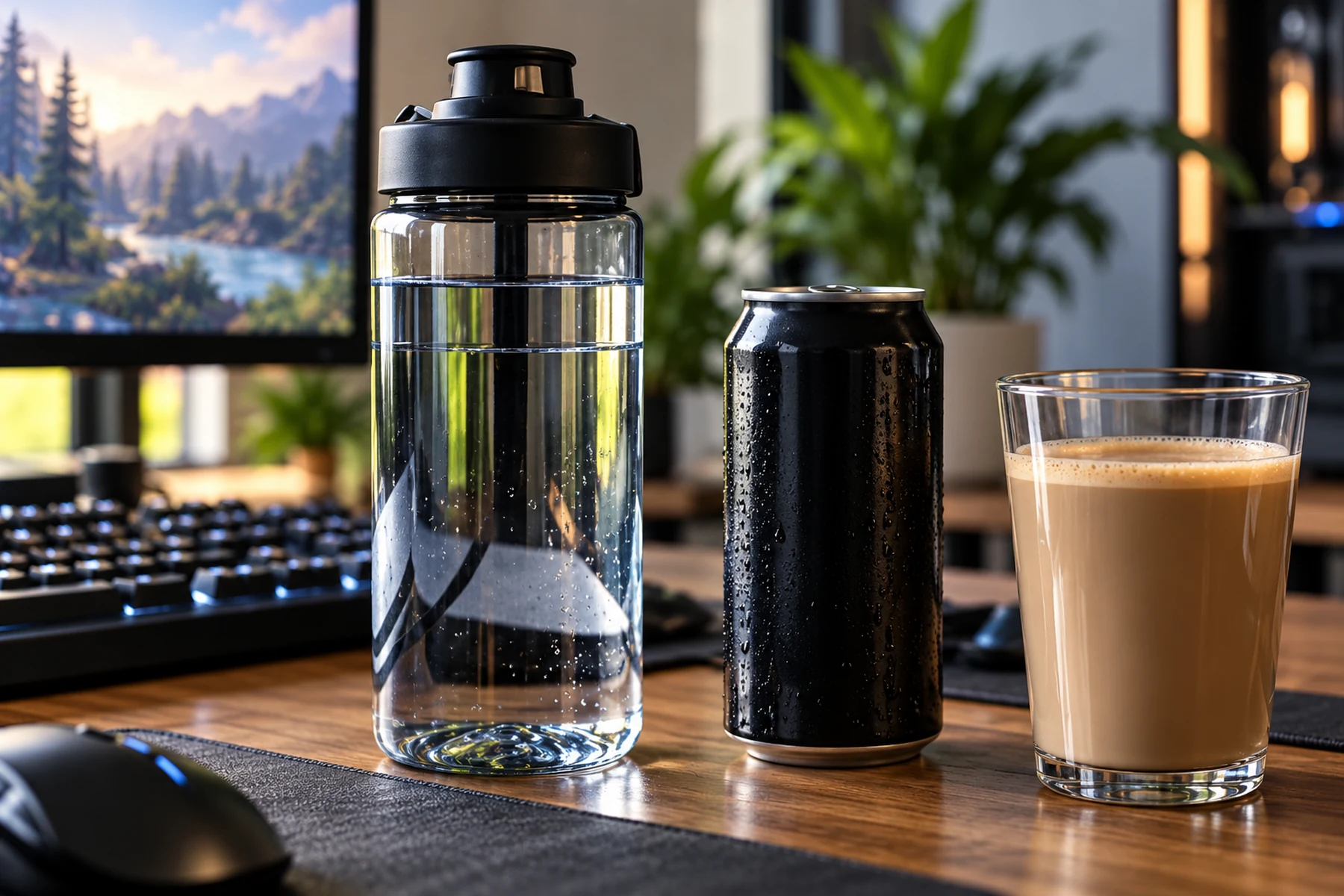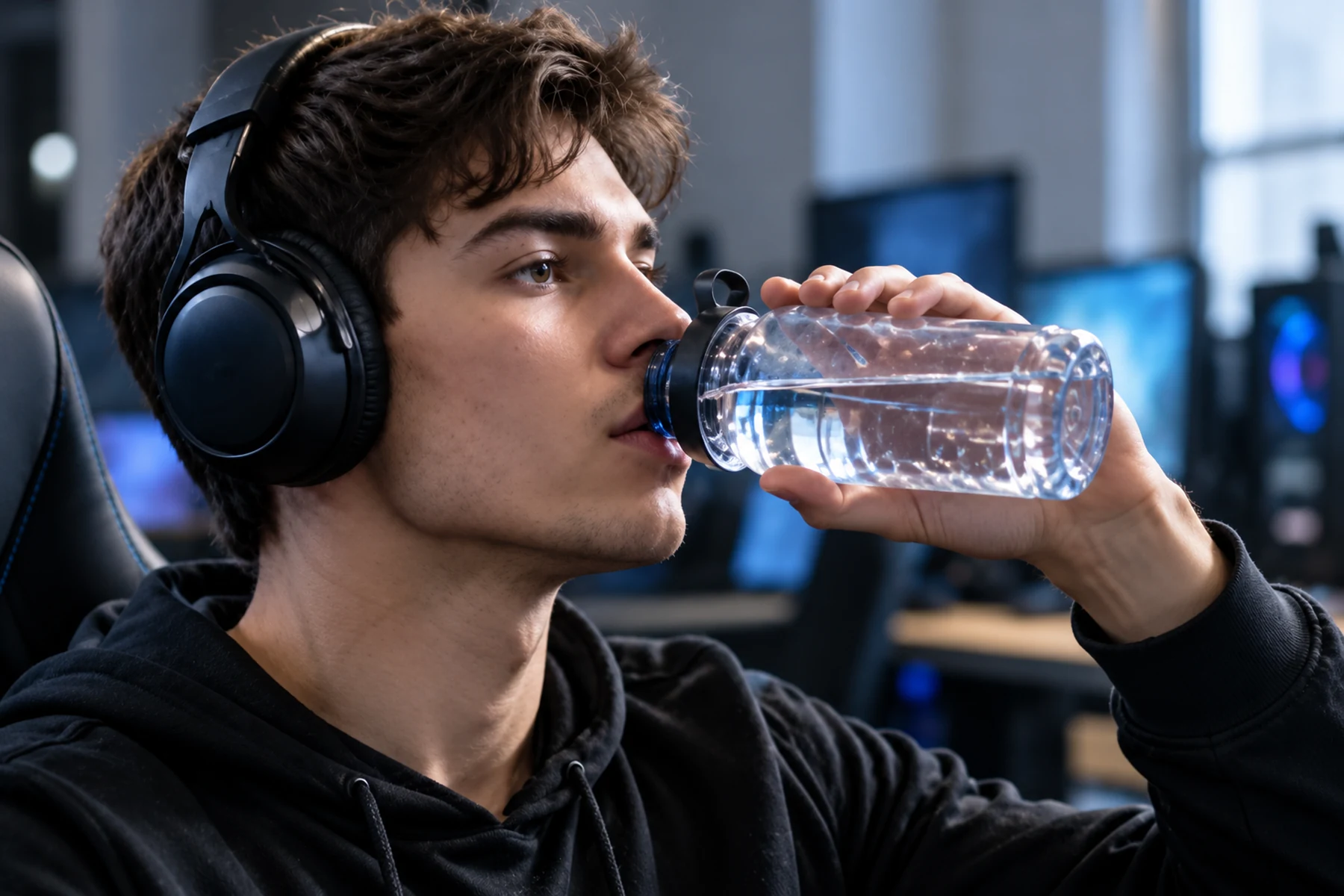
A Simple Baseline for Ordinary Sessions
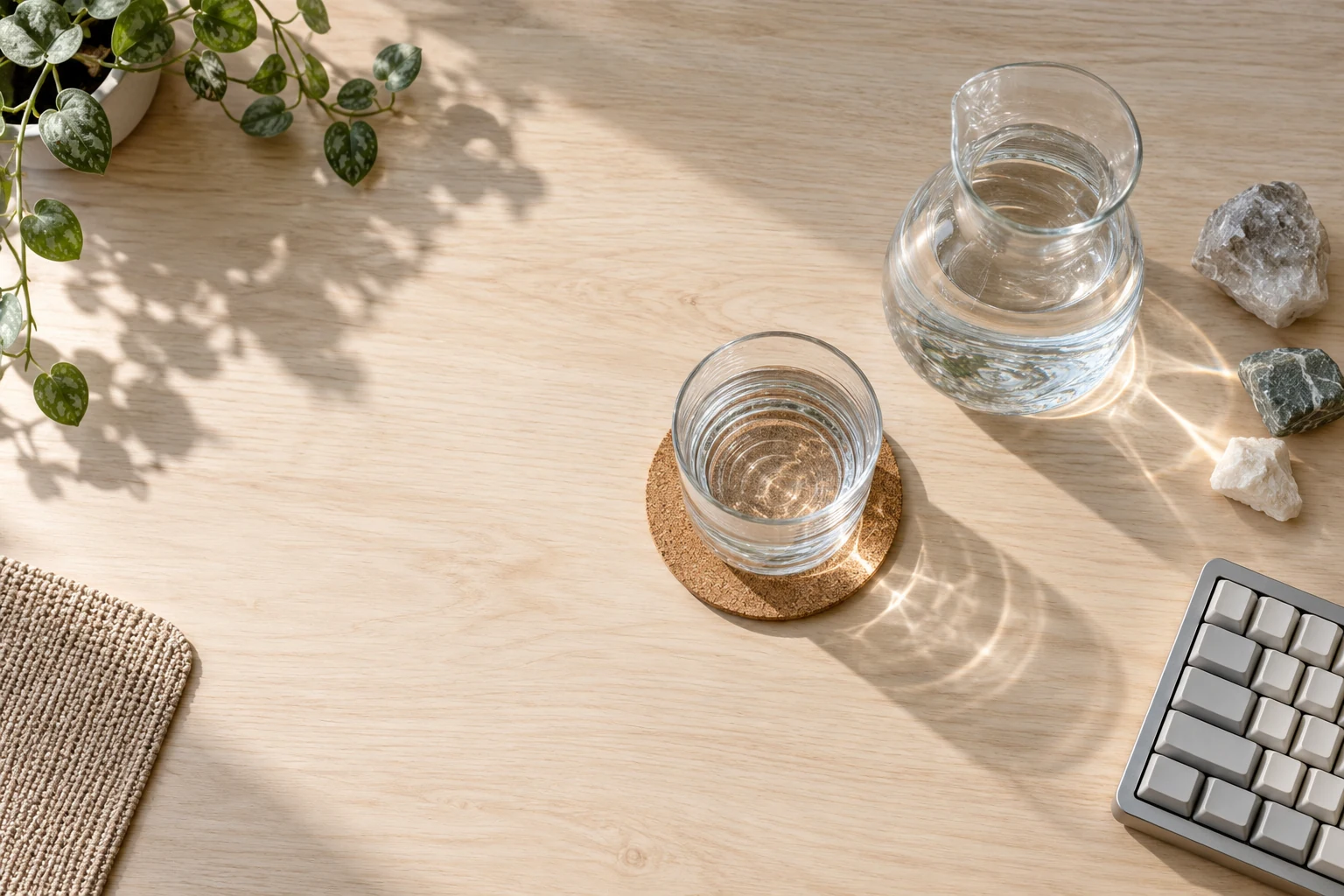
Put water within reach and drink small amounts during natural breaks instead of trying to catch up all at once. About 150 to 250 milliliters every 30 to 45 minutes is a practical starting point, not a quota; room temperature, body size and thirst still matter. Plain water is usually sufficient for an ordinary indoor session.
What a Fluid Deficit Changes First
The human brain holds around seventy-five percent water by mass. Neural tissue is incredibly sensitive to minor deviations in systemic fluid volume or serum osmolality. Intense hyperfocus and high-stress scenarios regularly distract players from drinking. Hypohydration quickly exerts a direct tax on neurological processing capabilities.
Systemic fluid volume drops steadily when you neglect intake. Plasma osmolality climbs rapidly because blood sodium becomes concentrated. Specialized osmoreceptors located within your anterior hypothalamus measure this osmotic gradient. They signal the release of arginine vasopressin directly into the bloodstream. This hormone attempts to conserve water by heavily slowing renal output. Your sympathetic nervous system increases baseline activation to compensate. The goal is keeping mean arterial pressure stable despite dropping blood volume.
Cognitive Processing Speed and Reaction Latency
Psychomotor research maps exactly how fluid loss punishes gamers. A drop of one point five percent of total body mass drastically limits attention capacity. Working memory scanning slows significantly. Executive coordination takes a measurable hit when balancing multiple inputs. That physiological deficit translates directly to a ten to thirty millisecond penalty in target acquisition. Motor error rates spike across the board. Your crosshair placement becomes inherently sloppy and requires constant micro-corrections.
Visual tracking speed deteriorates just as fast. The ocular surface requires constant hydration to preserve the pre-corneal tear film. Systemic hypohydration decreases baseline tear production noticeably. You will experience severe ocular dryness during long sessions. Blink friction increases against the eyelid. Visual distortion happens during rapid screen transitions or high-refresh-rate flick shots. You miss subtle visual cues simply because eyes cannot maintain surface moisture.
Cortisol Elevation and Perceived Cognitive Strain
Dehydration functions as a standalone physiological stressor on your central nervous system. It amplifies the standard neuroendocrine response you already get from competitive pressure. Identical mental workloads trigger much higher adrenocortical activation when fluid levels are low. Salivary and circulating cortisol levels spike unnecessarily and stay elevated. This hormonal state makes you feel physically drained. Mental fatigue sets in faster than it should. Frustration mounts exponentially over minor mistakes.

Treat Symptoms as Late Signals
Progressive water loss can affect gaming mechanics in distinct stages. Recognizing these physiological warnings prevents complete performance collapse mid-tournament.
| Dehydration Level | Primary Physiological Changes | Impact on Gaming Performance | Required Countermeasure |
|---|---|---|---|
| Baseline Fully Hydrated | Normal plasma osmolality and optimal cerebral perfusion | Peak reaction latency and stable emotional regulation | Sip 150 to 200 ml hourly to maintain balance |
| 1 Percent Fluid Loss | Mild rise in serum osmolality and hypothalamic activation | Micro-lapses in peripheral attention and slight ocular dryness | Consume 250 ml water with light minerals |
| 2 Percent Fluid Loss | Vasopressin surge elevated heart rate reduced stroke volume | Measurable 15 to 25 ms reaction delay increased aim jitter | Consume 500 ml hypotonic fluid over thirty minutes |
| 3 Percent or Higher | Marked sympathetic dominance and impaired thermoregulation | Severe executive dysfunction headaches persistent fatigue | Immediate session halt and structured oral rehydration |
Small Regular Drinks Beat a Last-Minute Bolus
Gamers consistently wait until their mouth is completely dry to drink. They rapidly swallow a large amount of water in gulps. This intake pattern sabotages your body's ability to utilize fluid efficiently and creates physiological disruptions carrying over into the next match.
The Problem with Large Fluid Boluses
Drinking a large volume of plain water at once causes rapid distension of the gastric walls. Systemic plasma osmolality crashes temporarily. The hypothalamus registers this sudden artificial dilution. It wrongly assumes you are in a state of dangerous hypervolemia. Vasopressin release shuts down immediately. Your kidneys go into absolute overdrive. They initiate rapid diuresis just to dump the excess water you forced down.
Paced Micro Sipping for Intracellular Retention
Drink one hundred fifty to two hundred fifty milliliters every thirty to forty-five minutes. This volume matches the human digestive tract's baseline gastric emptying rate perfectly. Paced intake lets water slide across the intestinal epithelium smoothly and continuously. This avoids a sharp osmotic response of vasopressin entirely. The water actually gets absorbed into the bloodstream.
Plain Water Is Enough More Often Than Not
Drinking pure distilled water in very large quantities can cause immediate systemic problems. It physically flushes existing electrolytes out of your system. Serum sodium drops dangerously low. Intestinal absorption rates plummet.
Sodium and the Glucose Sodium Co Transporter
Osmotic gradients completely dictate intestinal water absorption efficiency. Sodium and trace amounts of carbohydrates use the SGLT1 transport protein exclusively. This sodium-glucose cotransporter moves molecules across the brush-border membrane in the small intestine. It physically drags water molecules along via a process called solvent drag. You need that mechanism functioning efficiently.
Potassium and Magnesium for Neuromuscular Function
You execute thousands of rapid muscular contractions in your hands and forearms during a session. Cells rely on intracellular potassium and magnesium to fire correctly. These minerals actively maintain the cell membrane resting potential. They allow smooth muscle contraction during heavy tracking movements. Fluid flushing combined with zero mineral intake creates a severe deficit. Localized muscle cramping occurs in the flexor tendons.
Adjust the Plan to Session Length
You cannot use identical hydration plans for a quick scrimmage and an eight-hour tournament bracket. Thermal conditions and stress profiles dictate entirely different physiological fluid demands.
| Session Type | Duration | Recommended Beverage | Timing Protocol |
|---|---|---|---|
| Short Practice Block | 1 to 2 Hours | Plain water or lightly mineralized water | 150 ml consumed before start 150 ml mid-session |
| Ranked Grind Session | 3 to 5 Hours | Water with low-dose electrolytes sodium and potassium | 200 ml sipped between match lobbies or queues |
| Tournament Competition | 6 or More Hours | Hypotonic electrolyte solution with trace carbohydrates | 200 ml every 40 minutes avoiding hypertonic sodas |
Drinks That Create a Second Problem
Mainstream gaming supplements routinely fail basic hydration mechanics. Their chemical formulations actively draw water out of your system.
Hypertonic High Sugar Energy Drinks
High sugar concentrations raise osmolarity. Anything exceeding eight to ten percent carbohydrates acts directly as a hypertonic liquid. It reaches your intestine and immediately pulls fluid out of your bloodstream. Osmosis forces water into the intestinal lumen simply to dilute those concentrated sugars. Gastric emptying stops dead in its tracks. You get severe gastrointestinal cramping.
Diuretic and Caffeinated Overload
Moderate caffeine intake under three milligrams per kilogram does not dehydrate habituated users. Large doses from multiple high-stimulant energy drinks can make fluid balance harder to manage. They can increase fluid clearance, block adenosine receptors and alter renal plasma flow, which may mean more frequent bladder urges.
Build a Default Routine
Habits fail without physical cues and environmental design. Setup your desk to make hydration automatic.
- Position a dedicated covered water bottle within peripheral arm reach before launching your gaming client
- Consume two hundred fifty milliliters of water thirty minutes before beginning your first competitive match
- Take two to three sips of water at every loading screen death camera or intermission lobby
- Incorporate trace electrolytes or mineral drops into your water if sessions exceed three continuous hours
- Monitor urine color pale straw yellow indicates optimal hydration while dark amber signals active hypohydration
- Avoid hypertonic high-sugar beverages that delay gastric emptying and create sudden blood sugar crashes