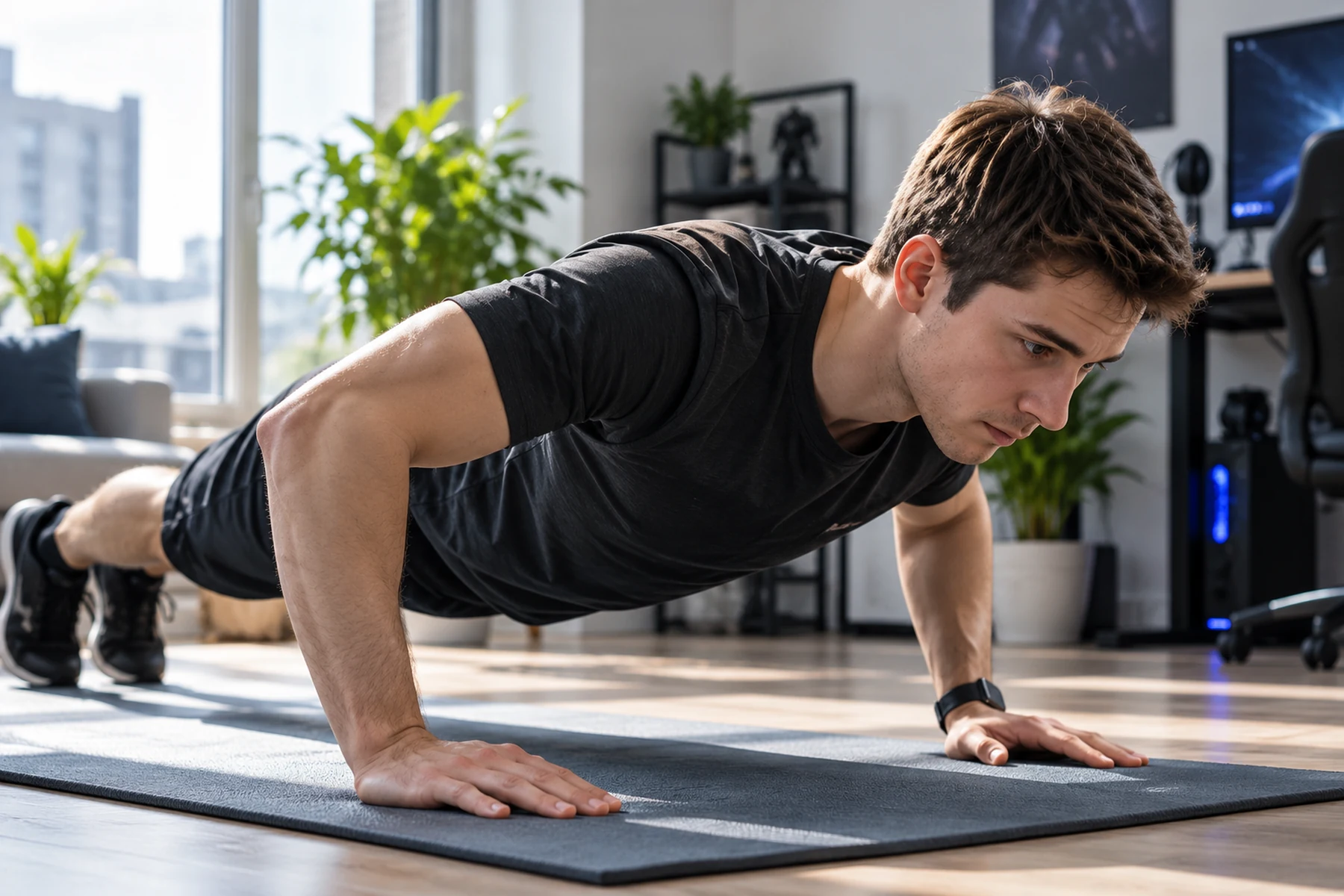
Break Up Sitting Before Adding Workouts
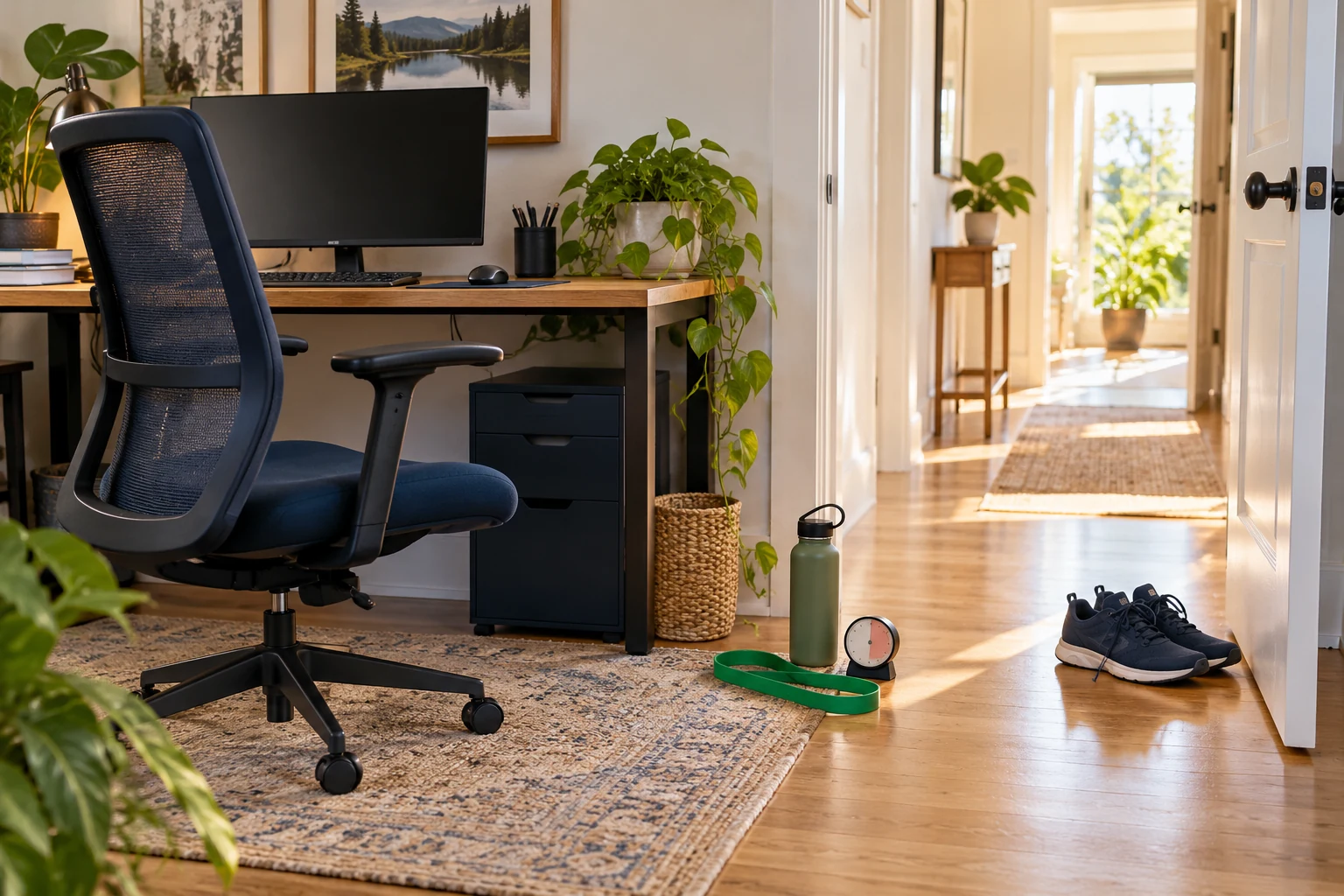
A morning workout and an uninterrupted ten-hour gaming block are two separate issues. Keep the workout, but also interrupt sitting every 45 to 60 minutes with about two minutes of movement. Across the week, aim for at least 150 minutes of moderate aerobic activity and two strength sessions.
Sitting Time and Exercise Are Separate Problems
Modern exercise physiology draws a hard line between sitting time and a lack of structured exercise. Sedentary behavior strictly defines any waking state where energy expenditure drops below one point five metabolic equivalents while sitting or reclining. Physical inactivity just means failing to meet baseline public health thresholds for moderate aerobic work each week.
A competitive gamer lifting weights five mornings a week qualifies as highly sedentary if the remaining waking hours involve absolute immobility at a desk. Prolonged sitting forcibly suppresses skeletal muscle contraction across the largest muscle groups. The quadriceps and gluteals essentially switch off. These postural muscles stay electrically silent, causing local metabolic clearance of triglycerides and glucose to plummet.
The distinction matters because gym time cannot cancel out desk time. Pushing heavy weights provides necessary systemic stress. Sitting motionless removes all systemic stress, signaling the body to halt basic metabolic housekeeping. Addressing one without addressing the other leaves a gap in physical resilience.
Metabolic Consequences of Immobility
Sustained muscular inactivity tanks the activity of endothelial lipoprotein lipase. This enzyme clears circulating fats and regulates cholesterol metabolism. Cellular glucose uptake through insulin-independent GLUT4 transporters practically stalls after ninety minutes of remaining static in a chair. Long gaming sessions force these acute metabolic suppressions to stack up daily. Over months, this behavior directly drives reduced insulin sensitivity and triggers unfavorable shifts in blood lipid profiles.
Metabolic sluggishness hits cognitive performance fast. Cerebral blood perfusion drops. Continuous sitting reduces peripheral vascular shear stress and slows down blood flow velocity across the board. Declining cerebral blood flow erodes cognitive endurance. Working memory retention slips. Fine motor precision degrades heavily during multi-hour competition blocks, often without the player realizing the root cause is physical stagnation rather than mental fatigue.
Players often misdiagnose this late-game brain fog as a need for more caffeine. Adding stimulants on top of restricted blood flow forces the cardiovascular system to work harder just to maintain baseline alertness, masking the core issue of metabolic shutdown.
Vascular Stasis and Venous Return in Long Matches
Gravity forces venous blood to pool in the lower extremities whenever the calf muscle pump disengages. Bending the knees and hips for hours physically compresses the popliteal and femoral veins. This creates turbulent flow, reduces shear stress, and traps blood in the lower legs. Physical stasis actively spikes the physiological risk of deep vein thrombosis for individuals grinding out long gaming sessions without walking breaks.
Lower extremity blood pooling slashes the effective circulating blood volume returning to the heart. The cardiovascular system detects this drop and forces resting heart rate higher to preserve cardiac output. Baseline sympathetic nervous tone climbs upward before the actual stress of the match even starts. High baseline tension drains central nervous system reserves prematurely.

What Long Sessions Change
Figuring out exactly where a gaming schedule lands on the sedentary continuum points toward the exact physical interventions required. Human physiology adapts to whatever positions it holds most frequently. Holding a seated posture teaches the nervous system that standing upright is abnormal.
| Sitting Duration | Primary Physiological Impact | Targeted Countermeasure | Implementation Timing |
|---|---|---|---|
| Under 4 Hours Daily | Mild postural fatigue with intact metabolic clearance | Standard weekly aerobic conditioning and light daily mobility | Post-match stretching |
| 4 to 7 Hours Daily | Reduced calf pump activity and tight hip flexors | Hourly two-minute active breaks plus daily brisk walking | Between ranked lobbies |
| 8 to 11 Hours Daily | Suppressed lipoprotein lipase and posterior chain weakness | Structured resistance training plus standing queue transitions | Before first competitive block |
| 12 or More Hours Daily | Significant venous stasis and chronic postural distortion | Hourly standing mobility and scheduled zone two cardio | Every match intermission |
A Two-Minute Break You Can Repeat
Breaking up sitting with short bouts of light to moderate activity jumpstarts metabolic clearance. It restores vascular endothelial function way faster than staying seated and hoping to fix the damage later at the gym. The two-minute protocol fits directly between matches or inside queue lobbies. It requires zero specialized equipment and demands zero floor space.
Consistency overrides intensity here. Hitting this protocol every single hour yields better metabolic returns than doing it once for ten minutes at the end of the day. The goal involves breaking the static hold on the musculature, not inducing heavy fatigue.
Movement 1 Standing Glute Squeezes and Air Squats
Stand up straight. Place feet shoulder-width apart. Drop into ten controlled bodyweight squats. Move through a full pain-free range of motion. Focus entirely on deliberate hip extension. Hit a firm one-second glute contraction at the top of every single repetition. This specific motion forcefully reactivates the inhibited gluteal musculature. It pumps fresh synovial fluid throughout the hip and knee joints, lubricating surfaces that dried out during the sitting block.
Keep the chest up. Drive the knees outward slightly to engage the gluteus medius. Avoid letting the heels peel off the floor. The foot needs to remain planted flat to generate maximum force through the posterior chain.
Movement 2 Calf Raises with Heel Drops
Shift to a wall for balance if necessary. Position the balls of both feet flat on the floor. Execute fifteen deliberate calf raises. Pause for one complete second at peak plantarflexion. Lower the heels down slowly. This hard muscular action forces the soleus and gastrocnemius muscles to compress deep intramuscular veins. Pooled blood shoots upward toward the inferior vena cava. Venous return spikes instantly.
Pumping the calves acts exactly like a secondary heart for the lower body. Prolonged inactivity in the lower legs reduces systemic circulation efficiency. Forcing it back into the core stabilizes blood pressure and drops the resting heart rate back to baseline.
The Weekly Target Beyond Micro-Breaks
Scrubbing away chronic sedentary adaptations demands a non-negotiable baseline of weekly structured exercise. Gamers need functional athletic conditioning. The program must restore cardiovascular capacity, build posterior chain resilience, and maximize postural endurance.
| Training Component | Weekly Frequency | Intensity and Volume | Target Adaptation |
|---|---|---|---|
| Zone 2 Aerobic Base | 3 to 4 Sessions | 30 to 45 Minutes at 65 to 75 Percent Max Heart Rate | Capillary density, mitochondrial biogenesis, lower resting pulse |
| Posterior Chain Resistance | 2 to 3 Sessions | 30 to 40 Minutes of compound pulls, hinges, and carries | Gluteal activation, thoracic extension, lumbar stability |
| Daily Walking NEAT | 7 Days Weekly | 7000 to 10000 Daily Steps accumulated across waking hours | Basal glucose disposal, vascular shear stress preservation |
Aerobic base training rebuilds the capillary networks that sitting reduces. Zone two intensity provides a useful stimulus for mitochondrial biogenesis without triggering systemic fatigue that might interfere with daily responsibilities. Resistance training focuses heavily on deadlifts, rows, and heavy carries to armor the spine against the inevitable forces of prolonged sitting.
Make Movement the Default
Pulling a completely sedentary gaming routine out of the gutter takes structured, progressive habit formation. Sudden large changes burn out in less than a week.
- Deploy a silent visual timer on the secondary monitor to prompt a two-minute active movement break every forty-five to sixty minutes without fail
- Execute fifteen calf raises and ten bodyweight squats the exact second you stand up between competitive games
- Relocate the main water container far away from the desk so getting a drink requires physically walking across the living space
- Lock in three thirty-minute brisk outdoor walks every week to lay down a solid foundation of aerobic conditioning
- Run two thirty-minute full-body resistance sessions per week focusing ruthlessly on rows, hinges, and heavy glute activation
- Ban all meals from the computer desk to force dedicated standing and walking intervals during lunch and dinner