Before You Open the Can
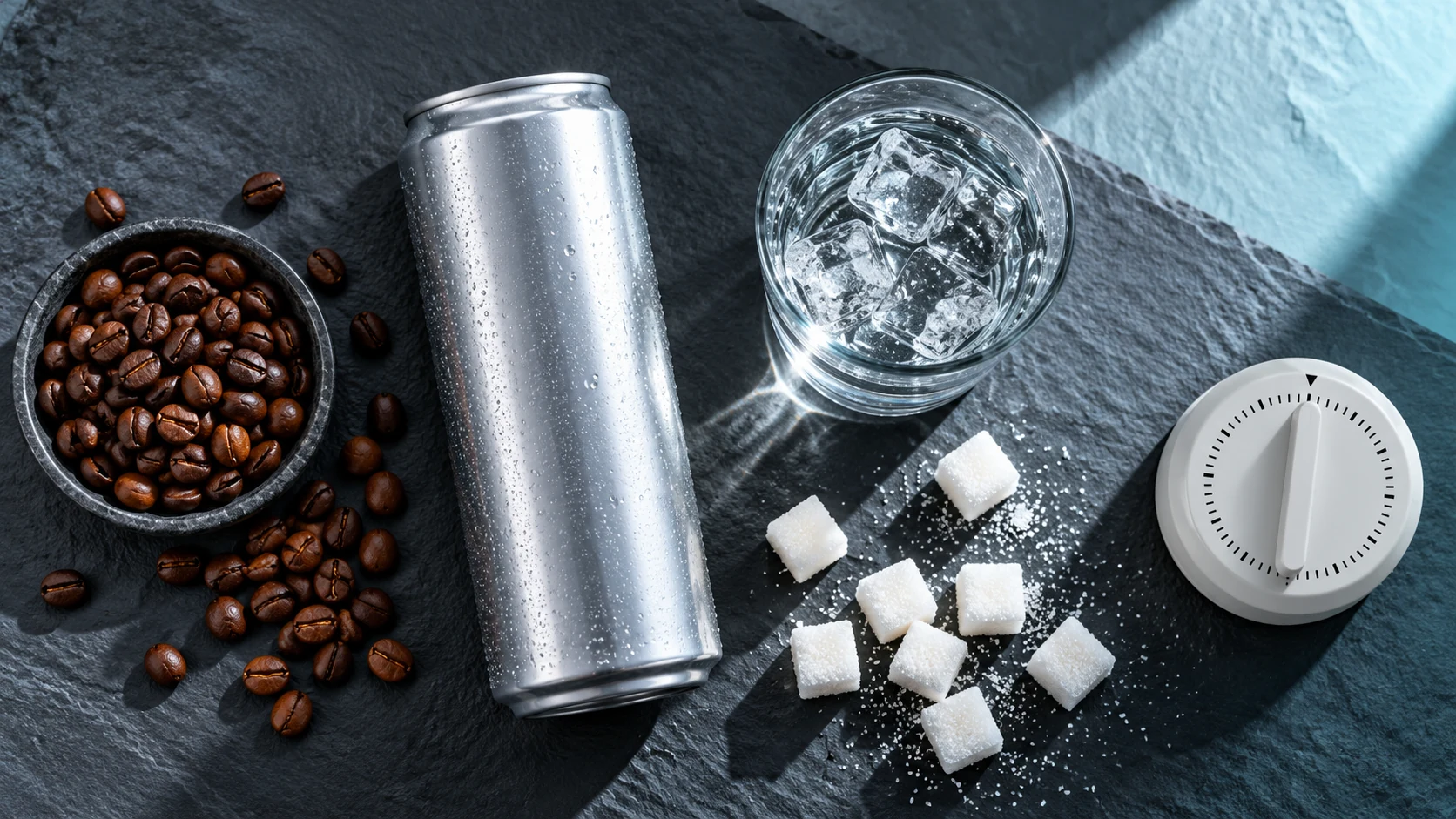
Treat an energy drink as a measured caffeine dose, not as gaming equipment. Read the amount in the whole can, include caffeine already consumed that day, and check both the sugar content and the time remaining before bed.
It is also the wrong drink for thirst. Start with water, and skip the stimulant when you are already anxious, shaky or within eight hours of sleep. More caffeine cannot repair sleep loss and may make fine mouse control less steady.
Read the Whole Label, Not the Front
Evaluating commercial energy beverages requires stripping away gaming-focused marketing claims. The primary ergogenic effect relies entirely on caffeine. This effect is modulated by the sugar content and secondarily influenced by trace amino acids. Read the nutrition panel to understand what chemicals you are introducing into your bloodstream before a match.
Caffeine Content and Multi Serving Traps
Standard 250-milliliter cans provide 80 milligrams of caffeine. Heavy performance cans reach 300 milligrams per 500-milliliter unit. Players frequently misread the nutrition panel on large cans. A label might report values per 240-milliliter serving while the container holds a full 473 milliliters. Consuming the entire can doubles the intended stimulant intake. Breaching the 200-milligram single-dose threshold consistently induces involuntary finger tremor and degrades tracking accuracy.
Caffeine functions by competitively binding to adenosine receptors in the brain, blocking the neurochemical signal for fatigue. When caffeine metabolizes and vacates those receptors, accumulated adenosine floods the system. This creates a severe post-match crash. Managing this curve is critical for multi-hour series.
Sugar Formulations Versus Non Nutritive Sweeteners
Standard sugar-sweetened drinks contain 25 to 55 grams of sucrose or high-fructose corn syrup per container. Simple sugars deliver rapid blood glucose elevation. High carbohydrate concentrations simultaneously slow gastric emptying. Ingesting a large sugar load while sitting stationary triggers a strong insulin response. This release drives blood glucose below baseline within 60 to 90 minutes. You will experience profound lethargy right in the middle of a best-of-three series.
Sugar-free formulations replace caloric carbohydrates with sucralose, acesulfame potassium, or erythritol. These variants deliver the necessary caffeine payload without provoking acute glycemic swings. Sugar-free energy drinks are mechanically superior for seated competitors requiring stable cognitive endurance.
Why Sugar Changes the Second Half of a Session
The concentration of dissolved particles in any beverage determines how fast the fluid exits the stomach and absorbs into systemic circulation. High-osmolality fluids sit in the gut, drawing water away from the rest of the body.
| Formulation Type | Carbohydrate Load | Gastric Clearance | Glycemic Profile | In-Game Crash Risk |
|---|---|---|---|---|
| High-Sugar Standard Can | 27 to 54 g per can | Slow | Rapid peak with sharp insulin rebound | High at 60 to 90 min mark |
| Sugar-Free Formula | 0 g | Fast | Stable blood glucose | Negligible glycemic drop |
| Dry Powder Gaming Tub | 0 to 5 g trace | Fast to moderate | Minimal glycemic shift | Low |
| Concentrated 60 ml Shot | 0 to 1 g | Immediate absorption | Stable blood glucose | Negligible glycemic drop |
Hypertonic sugary beverages pull water into the digestive tract. This creates gastric fullness and painful bloating. It delays systemic hydration during intense tournament conditions. Players experiencing gut discomfort often adjust their posture, compromising their ergonomic setup and arm aiming angles.
What Over-Stimulation Looks Like in Play
The interaction of high caffeine dosages with competitive autonomic arousal directly dictates motor dexterity. You cannot detach the chemical stimulant from the psychological stress of the match.
| Caffeine Ingested | Vigilance and Alertness | Mouse Aim Stability | Tactical Decision Quality | Autonomic Strain Risk |
|---|---|---|---|---|
| 80 to 120 mg | Noticeable sharpening | Preserved micro-control | Stable threat prioritization | Minimal in tolerant adults |
| 150 to 200 mg | High alertness and low fatigue | Slight forearm grip tension | Elevated aggression threshold | Moderate pulse elevation |
| 250 to 350 mg | Extreme central arousal | Measurable finger tremor | Impulsive tilt and overextension | High palpitations and sweating |
Moderate caffeine from energy drinks improves raw reaction time and target detection. Pushing into higher dosing ranges predictably compromises cursor precision. In tactical shooters requiring pixel-perfect crosshair placement, involuntary motor oscillations from heavy stimulant loads induce overshoot errors on micro-flicks. You will miss shots because your hand physically vibrates.
Compare Formats by Dose, Not Branding
Energy delivery systems range from pressurized cans to dry powder tubs. They vary substantially in absorption speed, dosage precision, and logistical suitability for LAN environments.
| Product Format | Standard Caffeine | Typical Serving | Portability and Shelf Life | Primary Practical Drawback |
|---|---|---|---|---|
| Standard Carbonated Can | 80 to 160 mg | 250 to 355 ml | Ready to drink | Carbonation bloat and fixed volume |
| High-Strength Can | 200 to 300 mg | 473 to 500 ml | Ready to drink | High dose risk and sleep disruption |
| Gaming Powder Formula | 140 to 200 mg scoop | 350 to 500 ml mixed | Customizable dilution | Requires shaker and clumping issues |
| Energy Shot Liquid | 100 to 200 mg | 60 ml | Pocket-sized | Harsh acidity and rapid spike |
Dry powder gaming formulas allow players to manipulate the dose by altering scoop ratios. Canned drinks lock the competitor into consuming a fixed chemical load. Dry powders frequently include proprietary blends of unverified botanical extracts. The collective interaction profile of these blends remains unstudied in seated digital athletes.
Nine Checks That Prevent an Avoidable Mistake
Run these parameters before consuming any energy beverage during a competitive block.
- Read the total for the whole container. A can may contain more than one labelled serving, so compare the full caffeine dose with your usual tolerance and body mass.
- Include earlier caffeine. Add coffee, tea and pre-workout products from the previous 12 hours; the drink should not push the daily total above 400 milligrams.
- Consider the sugar load. For a session longer than one 60-minute map, a sugar-free option avoids a rapid rise and fall in blood glucose.
- Protect the next sleep period. With fewer than eight hours until bed, the cost to sleep may outweigh the short-term lift.
- Account for reflux or a nervous stomach. Heavy carbonation immediately before an elimination round can make existing symptoms harder to ignore.
- Try water first. Drink about 300 milliliters and reassess after 15 minutes; thirst and fatigue are easy to confuse.
- Notice warning signs. Resting hand tremor, clammy palms or an elevated resting pulse are reasons not to consume more stimulant.
- Do not experiment on match day. Use only a familiar product and dose rather than an untested blend.
- Keep a non-stimulant option. Fresh air, cold water on the face and light movement can raise alertness without adding caffeine.
When an Energy Drink Is the Wrong Tool
Guidance commonly sets 400 milligrams of caffeine per day as the upper limit for healthy adults and restricts single administrations to 200 milligrams. Competitors holding underlying cardiovascular conditions, hypertension, or chronic panic disorders must permanently avoid high-caffeine energy beverages.
Combining energy drinks with alcohol, prescription stimulants, or unregulated fat-burning supplements forces the body into severe cardiac stress. It generates unpredictable arrhythmia risks. It heavily impairs tactical risk assessment. Terminate consumption immediately upon noticing irregular heart rhythms, acute chest pressure, dizziness, or uncontrollable muscular trembling. Step away from the desk and seek medical evaluation.